Building on What Exists
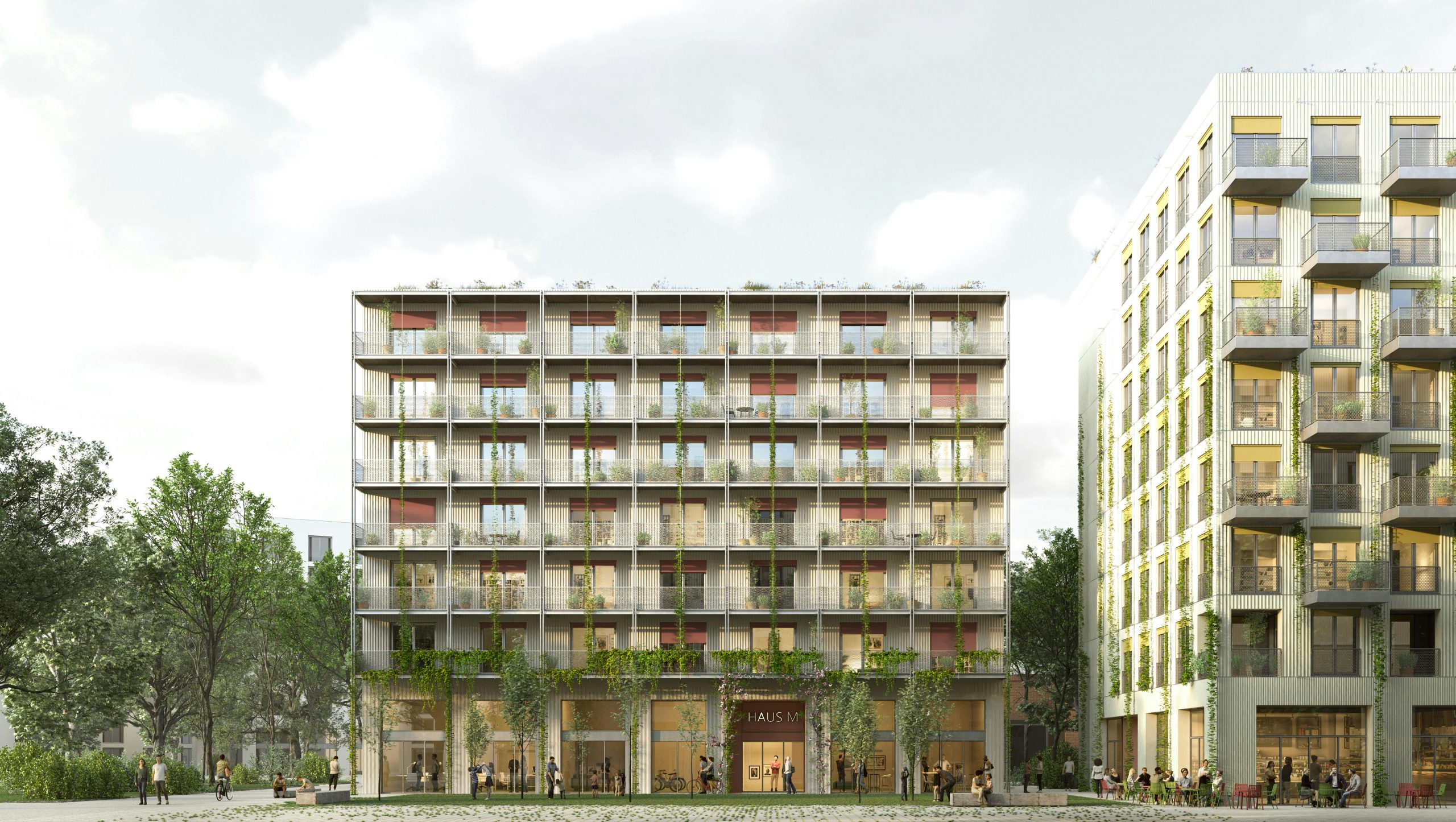
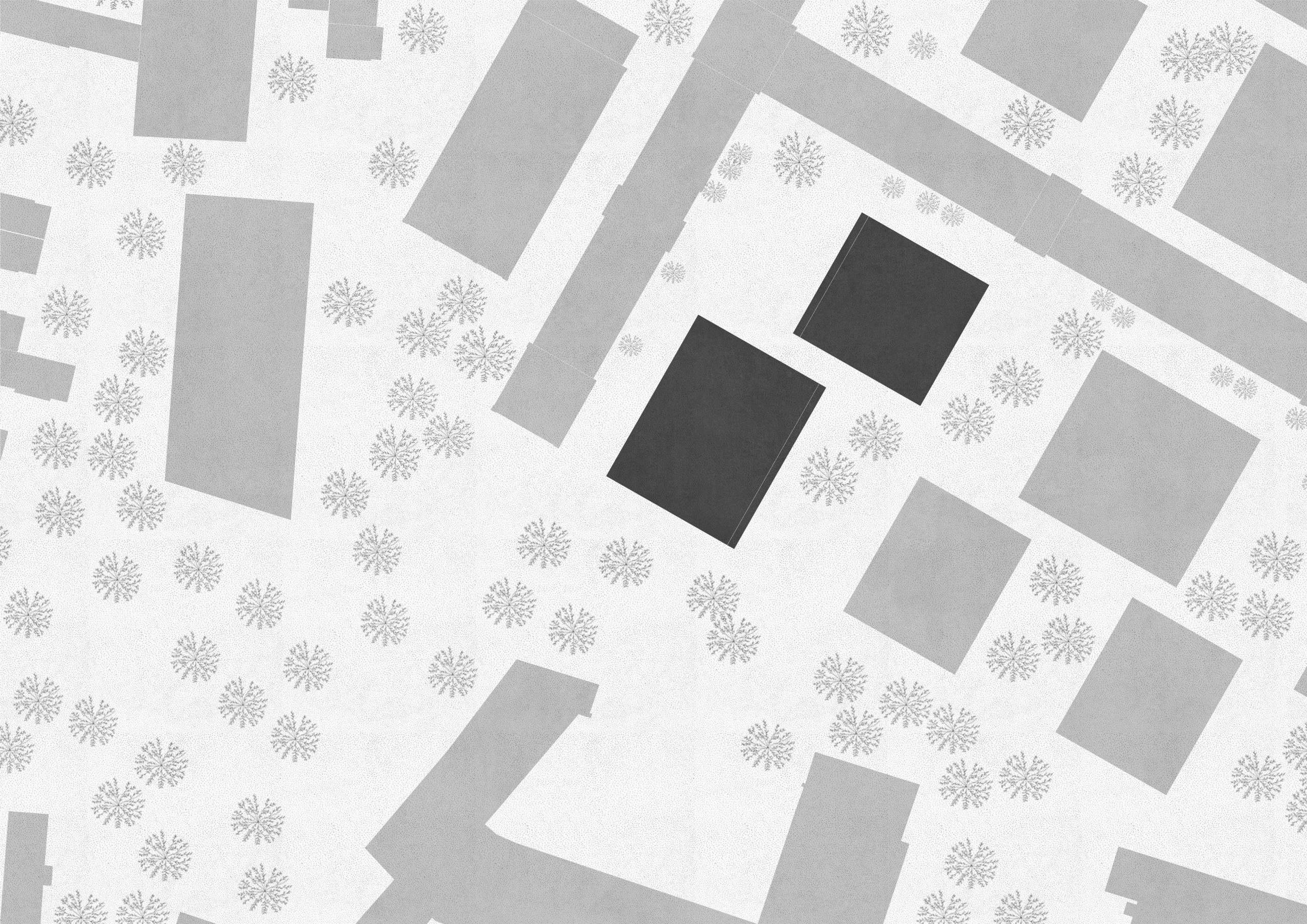
A new piece of city is emerging on Berlin’s »Dragonerareal«. Set between listed historic buildings, established open spaces, and evolving forms of living and working, the design develops an ensemble that makes history legible while carrying it forward in a contemporary way. The »Dragonerareal« is not reshaped or overwritten, but continued, as an urban quarter in Berlin that connects memory, everyday life, and future development.
The historic buildings remain the defining elements of the ensemble. Their scale, structure, and materiality establish the framework for the new additions. The new buildings deliberately take a subordinate role, aligning with existing building lines, heights, and rhythms, and extending the fabric with precision. The result is an urban composition that does not set old and new in opposition, but interlocks them, a careful and considered contribution to urban development in Berlin-Kreuzberg.
The new buildings follow the logic of the site and the guidelines of the development plan. They respect existing sightlines, pathways, and spatial edges, reinforcing the clear structure of the quarter. Courtyards, plazas, and transitional spaces emerge between the buildings, opening up the site and creating permeability. In this way, the »Dragonerareal« becomes an integrated part of the surrounding city, connected, legible, and accessible.
Integrated into the Urban Fabric
Facades Between Industrial Heritage and Residential Life
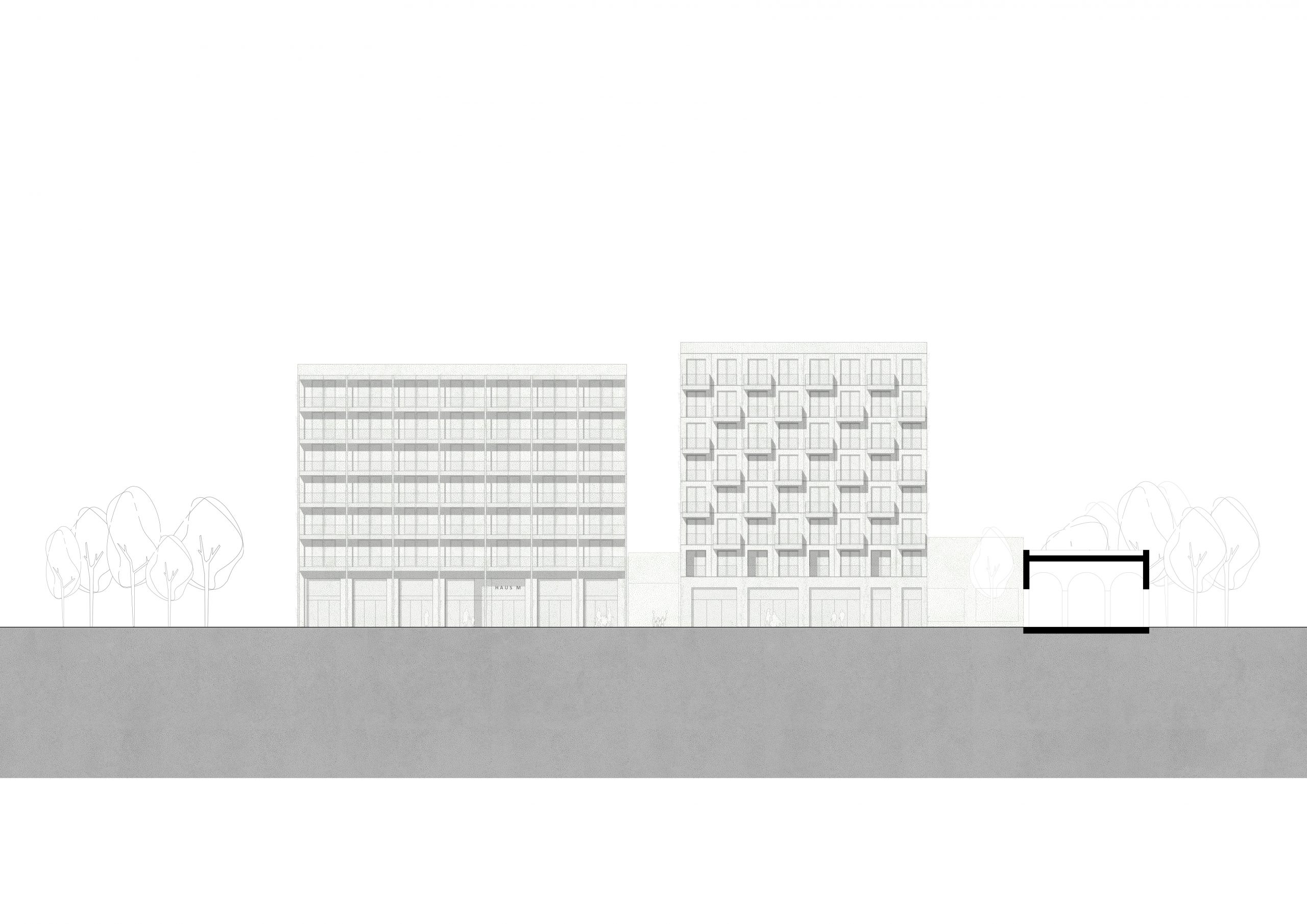
The façades draw on the site’s industrial heritage while interpreting it in a contemporary way. A calm composition, balanced window proportions, and a clear façade grid define the visual character. Balconies, loggias, and layered exterior spaces add depth and individuality. Floor-to-ceiling windows ensure high-quality living spaces and a strong connection between interior and city.
Materials such as steel, corrugated metal, and robust metal finishes reference the site’s history as an industrial and barracks area. At the same time, precise detailing, modern construction methods, and a restrained color palette create elegance and durability. Greened façades enhance the microclimate while linking architecture and open space.
Ground-Floor Zone as Public Space
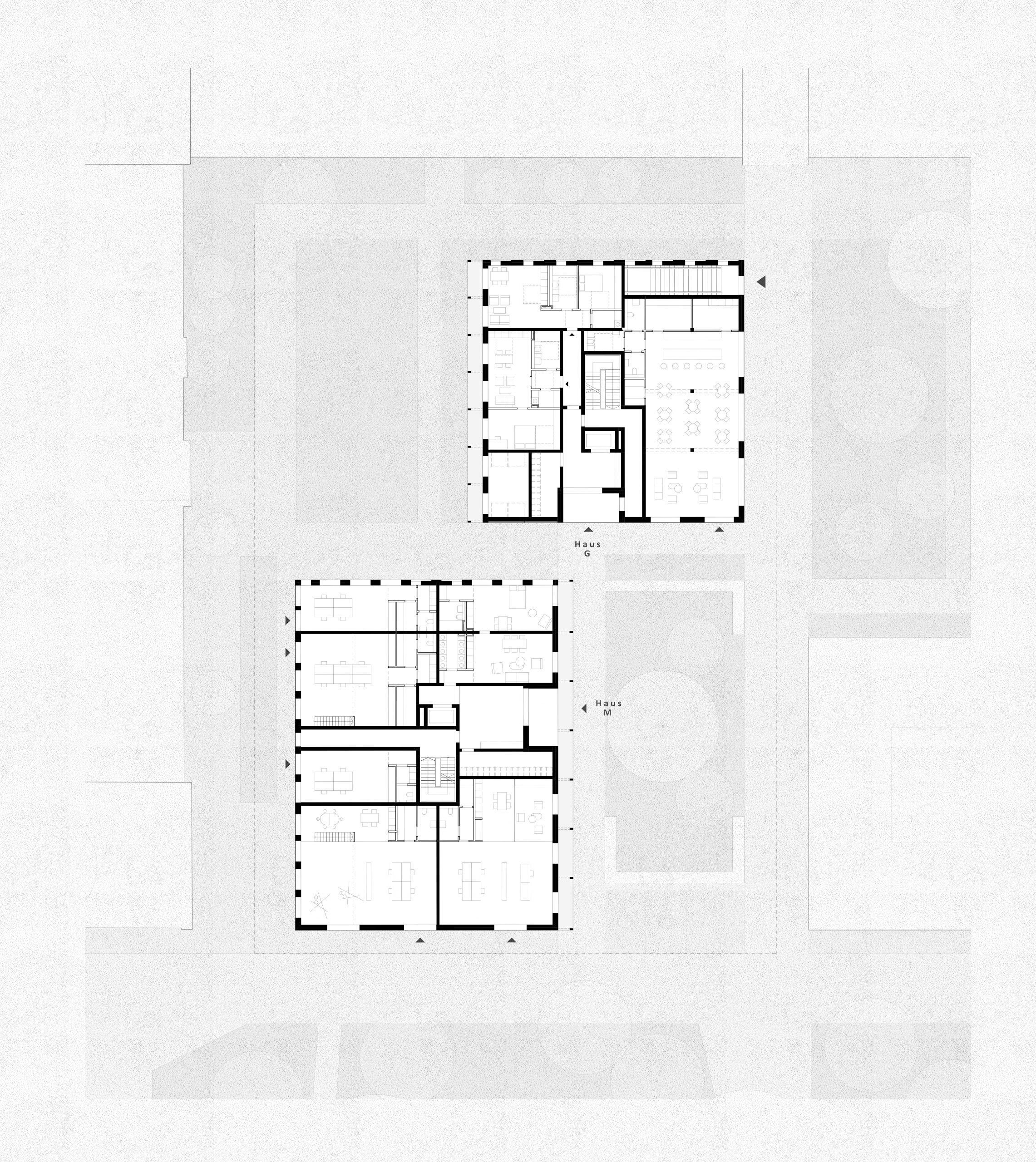
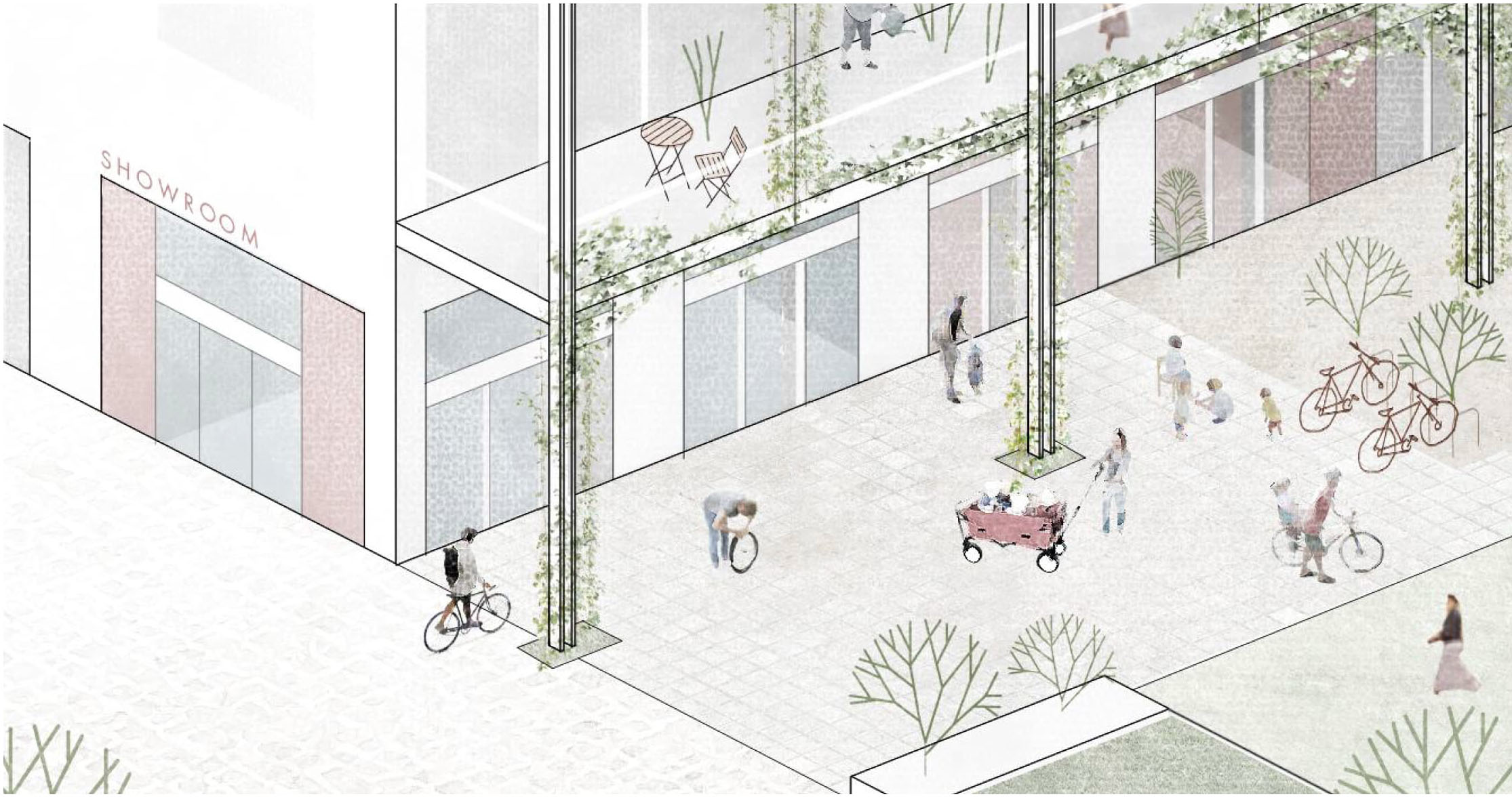
The ground floor forms the interface between the public city and private living. Commercial spaces, studios, and communal uses open onto the square, activating the quarter. Transparent façades provide visual connections and encourage social interaction. A robust urban base gives the buildings presence and clearly defined addresses. Entrances are oriented toward the central open spaces, reinforcing the quarter’s identity.
Construction – Robust, Flexible, Sustainable
The construction approach combines durability with adaptability. A solid base supports modular upper floors built in a skeletal framework. Prefabricated floor elements reduce both resource consumption and construction time. Exterior walls made of timber elements improve the building’s carbon footprint and engage in a deliberate dialogue with the industrial character of the façades. Sustainable design is not an add-on, but an integral part of the architecture.
Access and Mobility
A central square organizes arrival and orientation within the quarter. Pathways are clear, legible, and fully accessible. Residential units, commercial spaces, and studios each have their own dedicated entrances. A bicycle ramp and generous bike storage facilities promote sustainable mobility, aligning with the urban lifestyle of inner-city Berlin.
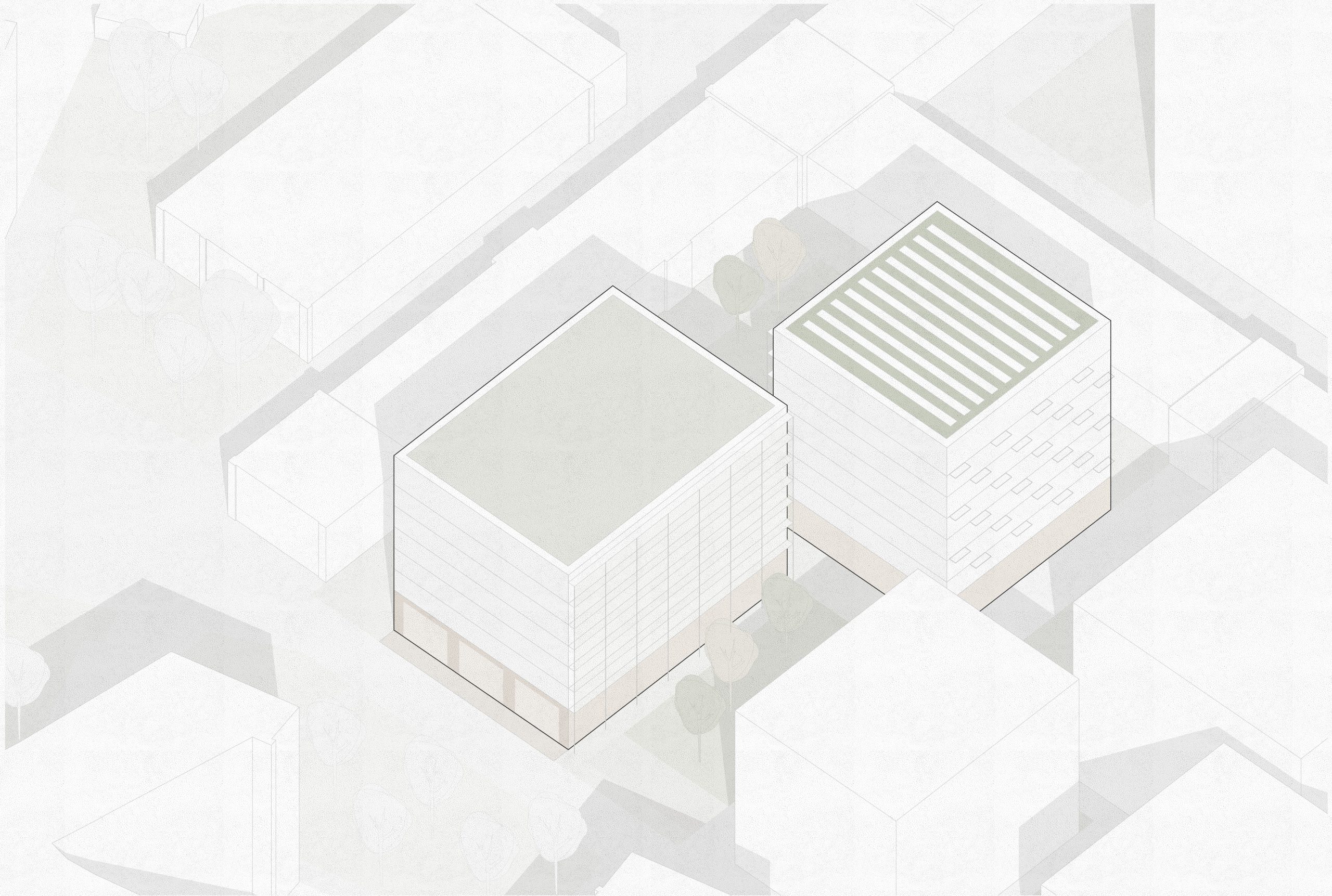
The residential offering in the »Dragonerareal« is diverse: compact apartments, family units, and cluster apartments accommodate a variety of lifestyles. All units feature private outdoor spaces in the form of balconies or loggias and are designed for optimal daylight. Living here is conceived as part of urban life, open and community-oriented, yet offering privacy.
Living in the Dragonerareal
Adaptable for the Future
The structural system allows for flexible floor plans and changes in use. Apartments can be combined or reconfigured, and commercial spaces adapted. The quarter remains adaptable, able to respond to future needs.
Green façades, retention roofs, and permeable open spaces improve the urban climate in the »Dragonerareal«. Rainwater is retained, surfaces are cooled, and biodiversity is promoted. Architecture, open space, and ecological systems are integrated, creating a sustainable and livable neighborhood in Berlin.
All buildings are fully accessible. One- and two-bedroom units are entirely barrier-free, while larger apartments are partially designed to accommodate accessibility needs. In this way, the »Dragonerareal« becomes an inclusive residential quarter, supporting a variety of generations and lifestyles.
Accessibility and Inclusion
Location
Berlin
Type
Living
Client
WBM Wohnungsbaugesellschaft Berlin-Mitte mbH
Time Frame
2025
Services
Design (1st Prize, Competition)
Status
Concept
Visualization
&MICA