Our design is rooted in respect and futurity. It connects historic building fabric with contemporary use. It connects the city with the Hofgarten. It connects different faculties through short circulation routes. It connects students, academics, and visitors. And it connects tradition with innovation for a modern university that carries its architectural heritage with dignity.
A Palace for the Future
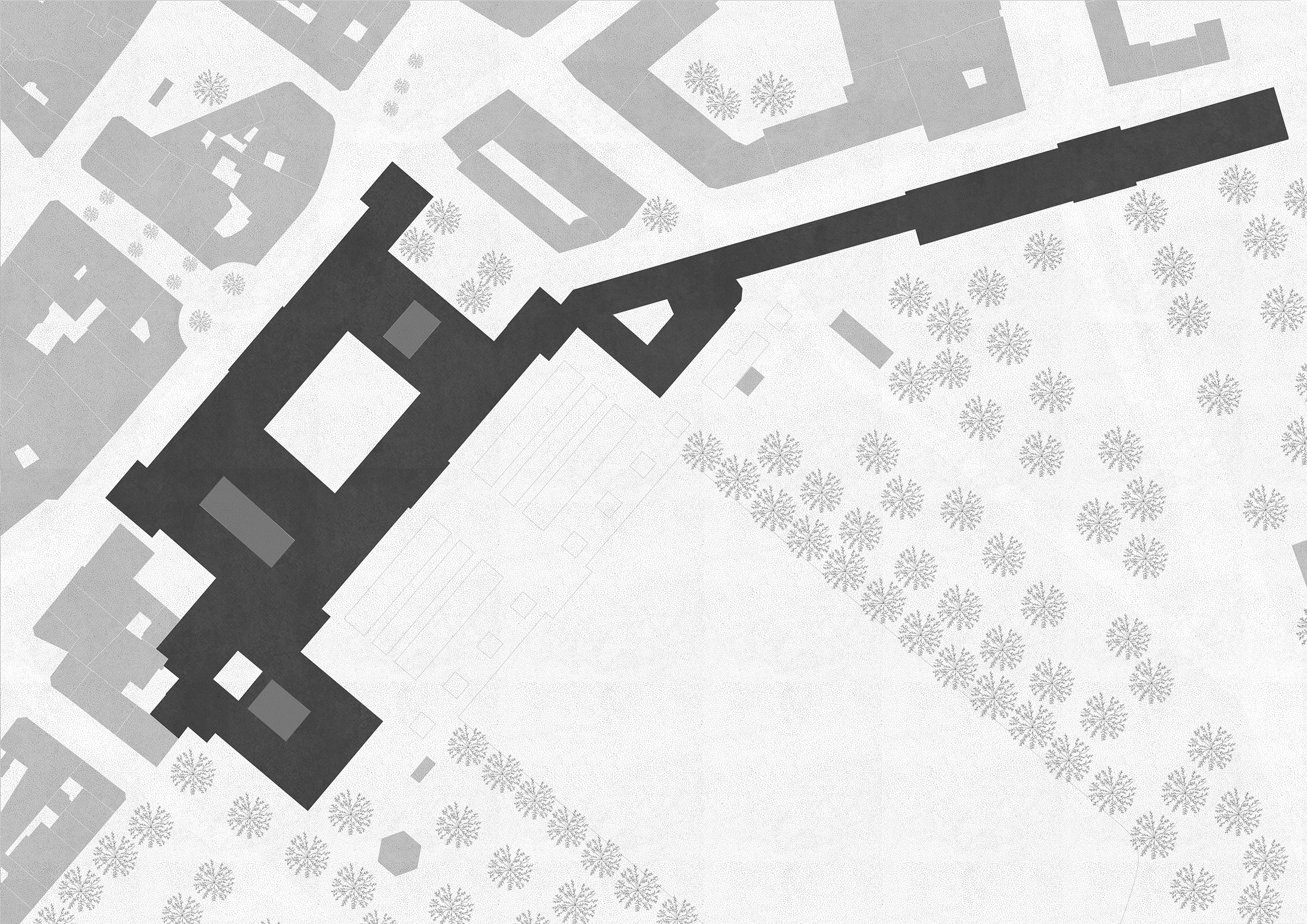
The former Electoral Palace has been the heart of student life in Bonn since 1818. This landmark structure sits embedded between the historic old town and the Hofgarten, along the axis toward Poppelsdorf Palace, a defining symbol of the Rhine Friedrich Wilhelm University.
Our aim: to achieve the greatest possible outcome through a minimal number of carefully considered interventions. A university that bears its long architectural history with dignity while simultaneously meeting the demands of contemporary pedagogy. The new circulation strategy opens the building to the urban realm, creates permeability, and gives rise to representative spaces. Barrier-free, legible, and fit for the future.
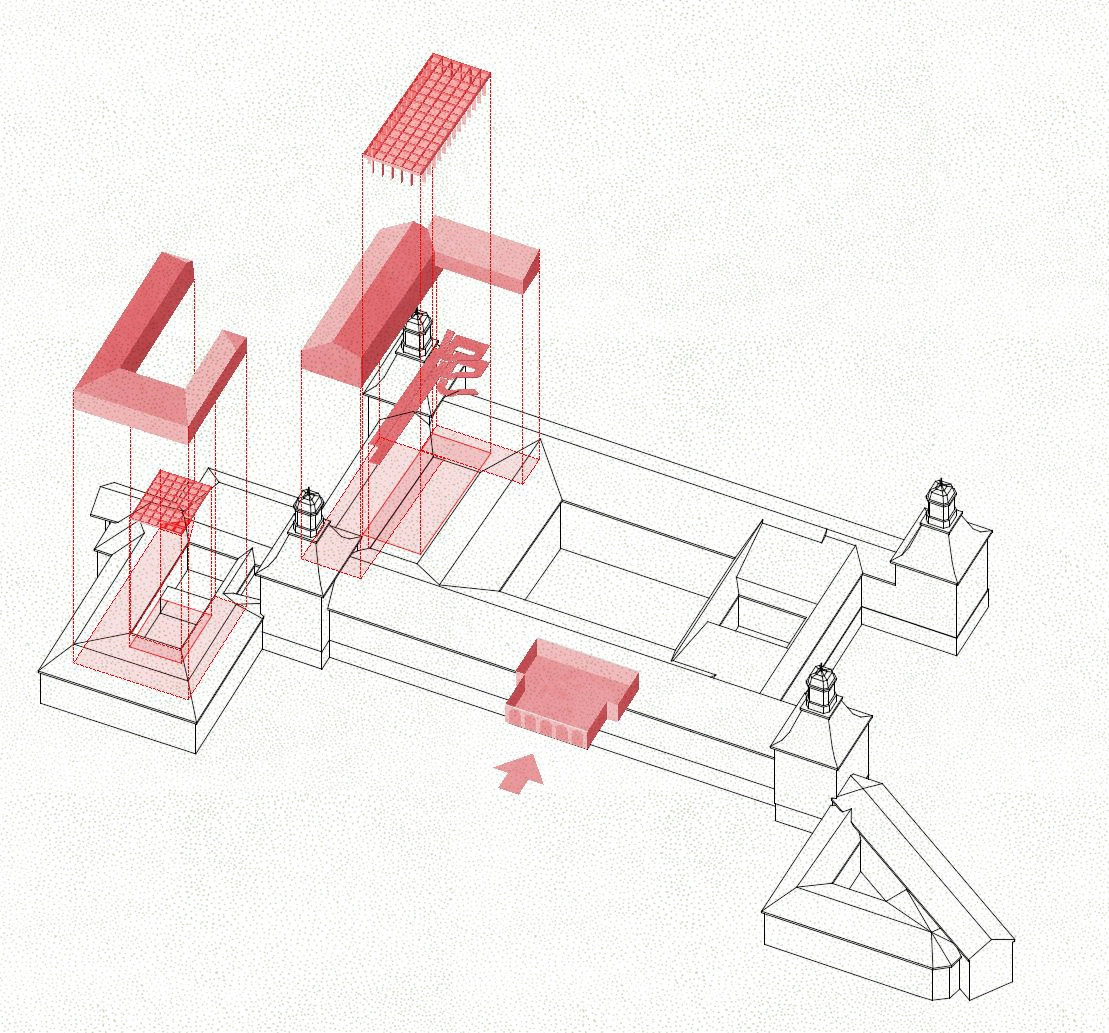
A respectful approach to the existing building fabric forms the foundation of our design. Following the principles of the Venice Charter, we add a new, clearly legible layer to the building’s architectural timeline. The building envelope and exterior character remain unaltered. Necessary additions are deployed as effectively and as sensitively as possible.
The most significant interventions are concentrated in the western section of the building and are barely perceptible from the exterior. The light-flooded roof structures over the Lichthof and Blumenhof, the level compensation, the restrained vertical extension. The rooftop addition re-establishes the historic three-storey articulation. The new glazed roof over the Blumenhof references its historic precedent through a contemporary reinterpretation.
Legible Strata of Time
Circulation: Two Axes, Countless Connections
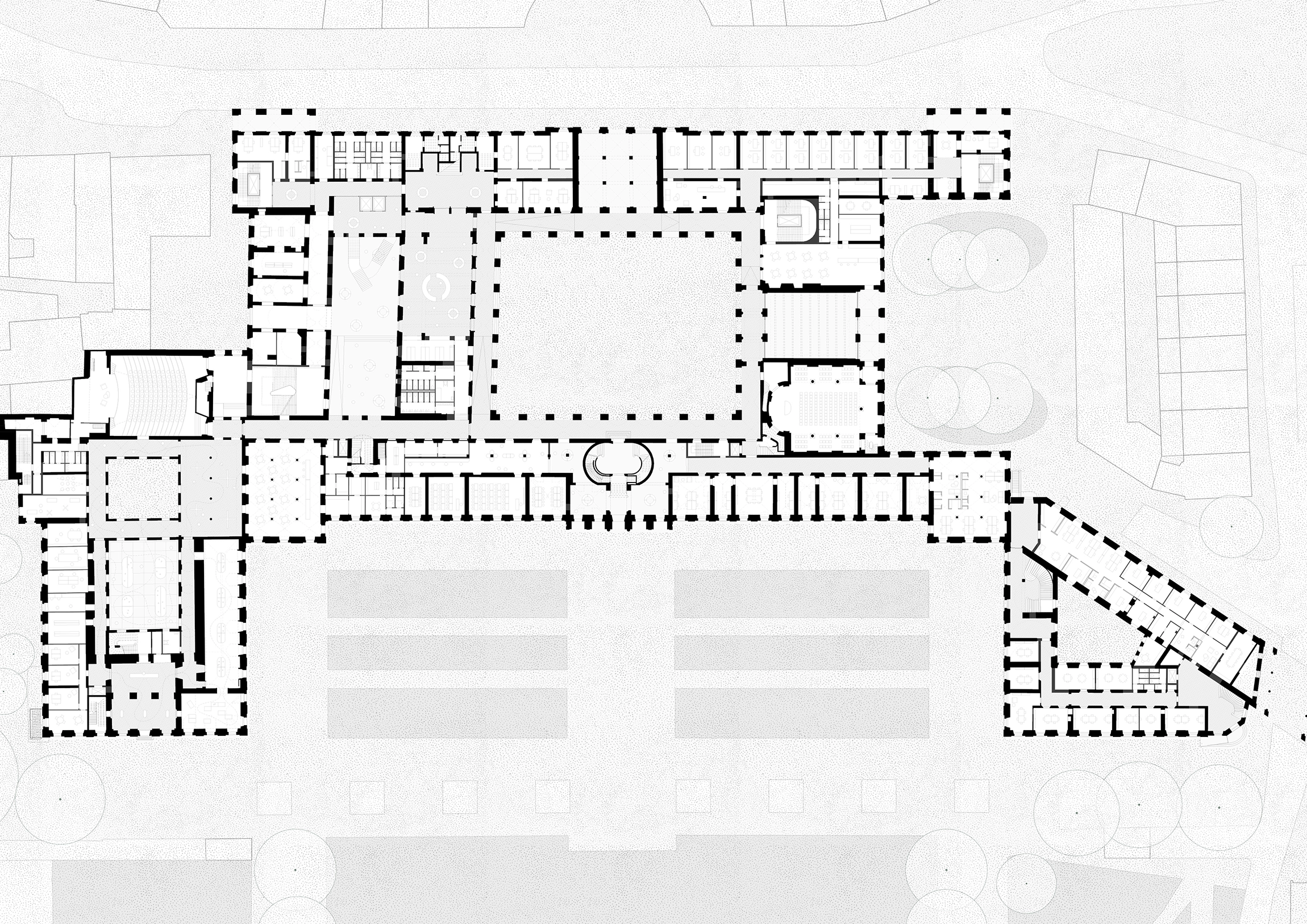
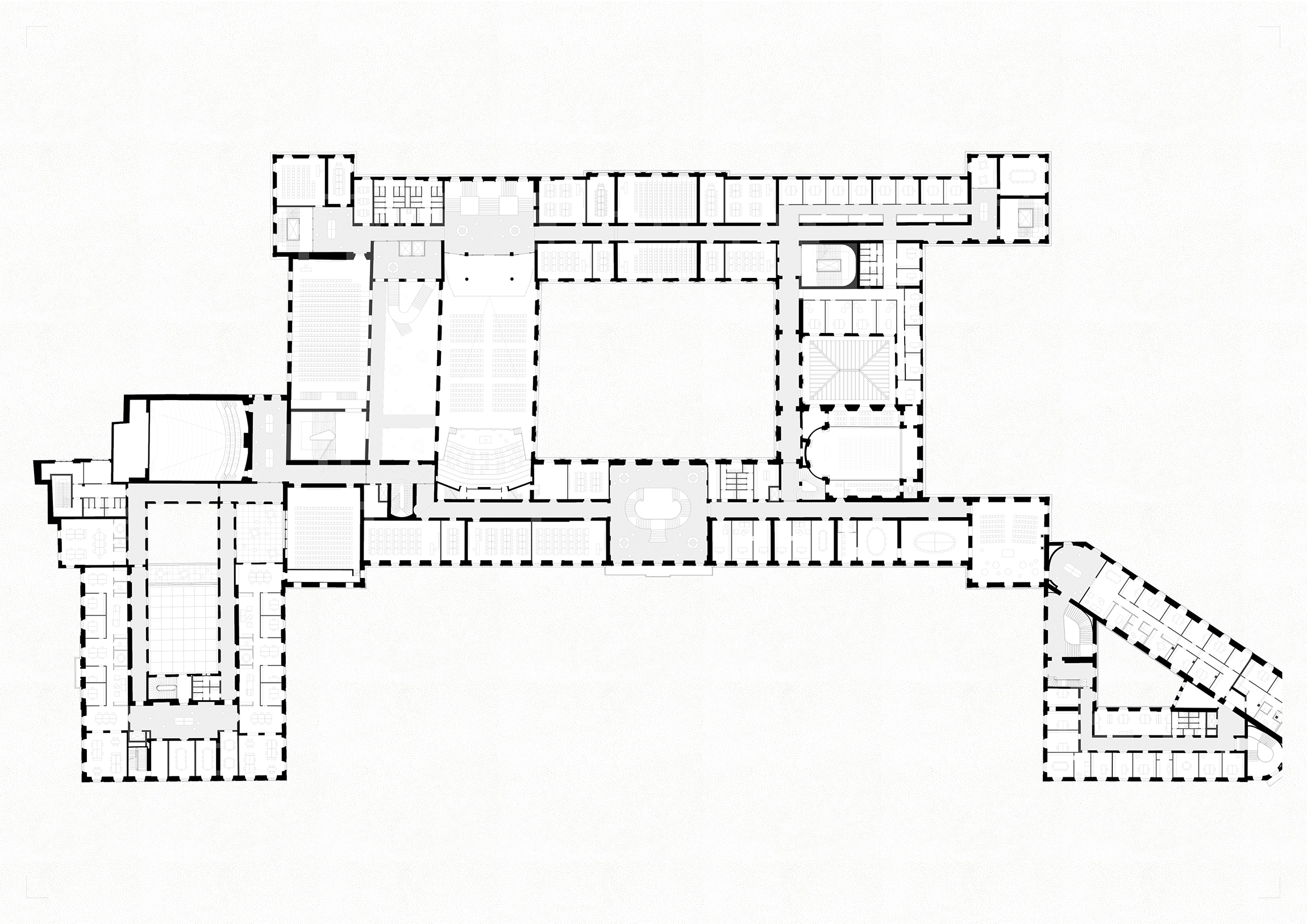
Two primary axes traverse the building like arteries. In the north–south direction, the generous opening of the Hofgarten portal creates an attractive, fully accessible connection between the city and the Hofgarten, a permeability that invites passage. In the east–west direction, we establish an axis of short routes: from the Arkadenhof through the newly configured Lichthof to the Blaue Grotte and onward to the adjacent university facilities.
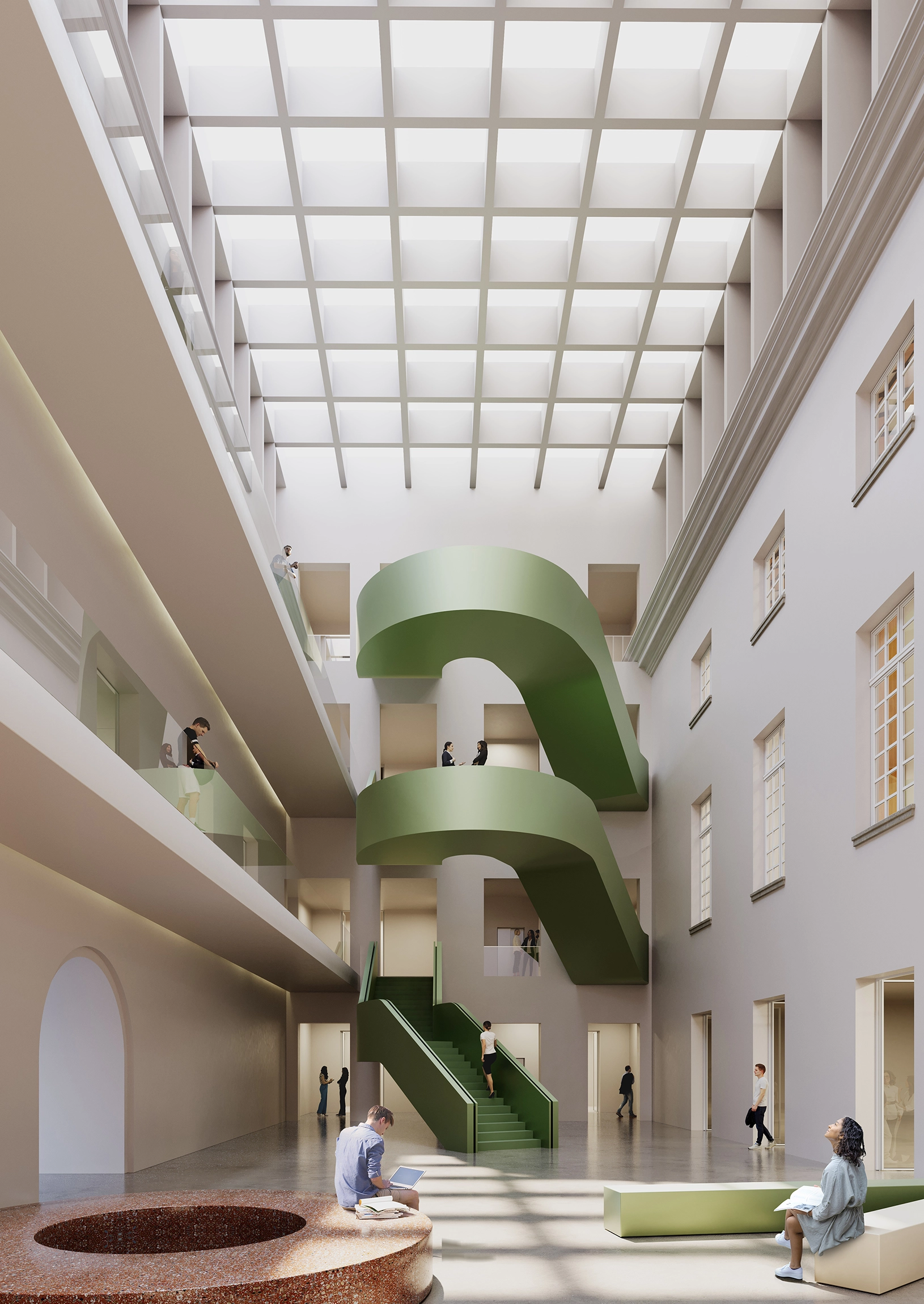
The Lichthof, currently a utilitarian service courtyard, becomes the luminous heart of the complex. Covered and flooded with natural light, it merges with the historic foyer to form a welcoming entrance sequence. Between the Arkadenhof, foyer, and Lichthof, a representative ensemble emerges with considerable flexibility for a wide range of programmes.
The principle of the ambulatory, derived from the Arkadenhof, is consistently applied across all levels as a continuous circulation corridor. Horizontal circulation meets vertical access, a clear, legible system. Each circulation space is given its own identity through colour and formal treatment. Wayfinding becomes intuitive.
All areas are made fully and unconditionally accessible. Level changes are carefully negotiated; remaining steps are resolved through ramps and staircases. Eight lift installations provide vertical access throughout the building, easily located and paired with the stairwells. Four of these are positioned at the corners of the central ambulatory, functioning as orientation markers through the palace.
Accessibility: Universal as a Matter of Course
Spatial Organisation: Where Everything Converges
Students, academics, and visitors enter the central foyer via the Arkadenhof, the representative prelude to their visit. Public-facing uses are arranged around the Arkadenhof: the student centre as the primary point of contact, and the bistro as a student café with external seating that opens onto the Arkadenhof, the Ehrenhof, and the Blaue Grotte.
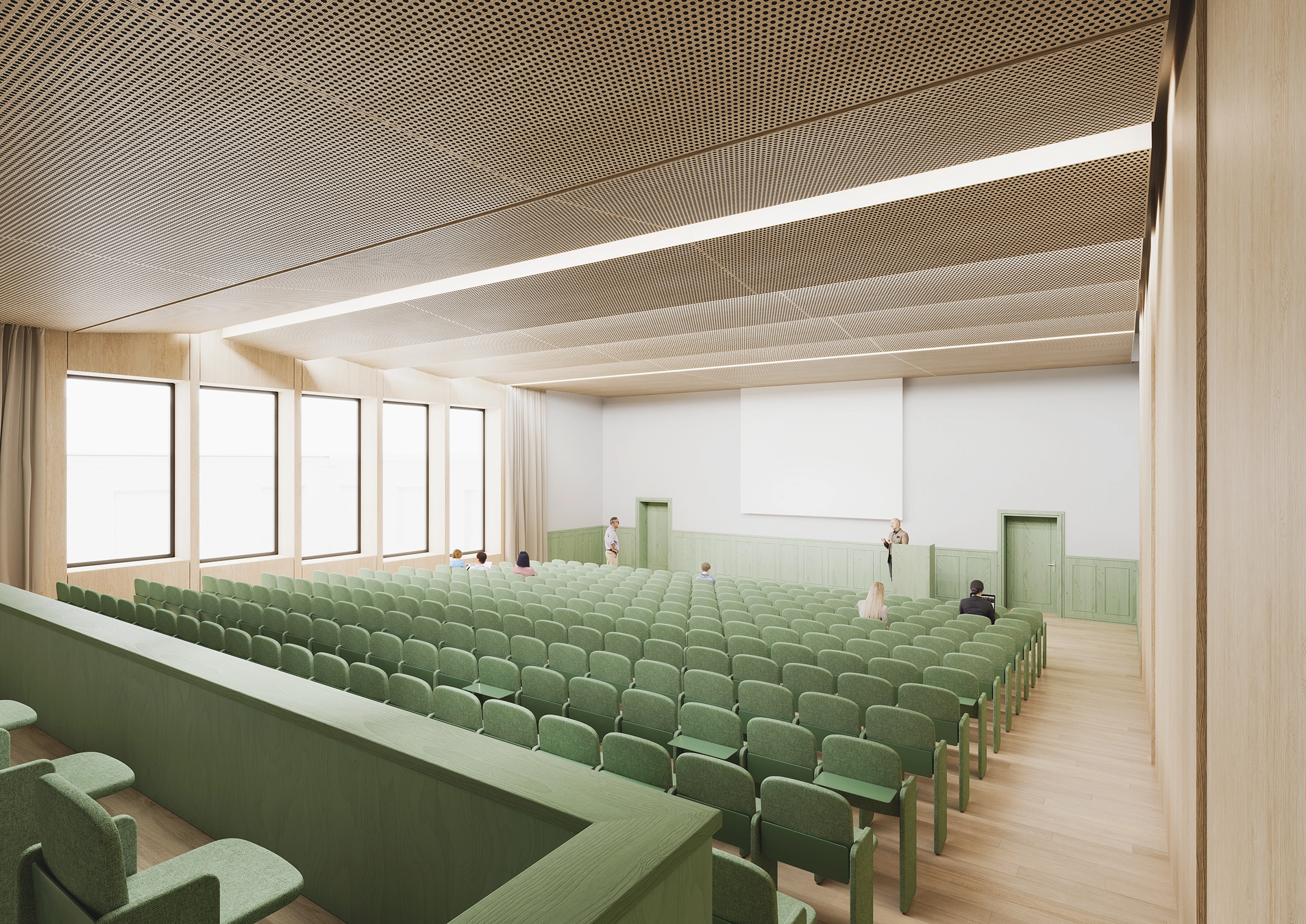
Event spaces are distributed across two key locations, reinforcing the campus character. Student workspaces are positioned centrally at the circulation cores. Easy to locate and in close proximity to lecture halls and seminar rooms. Logical adjacencies emerge: faculties border one another; functions are situated where they are needed.
Museum and Palace Café: Culture as Connector
The prominent position along the Hofgarten makes the Kaiserplatz wing the ideal location for the three museums. A dedicated entrance opens the collections to the public independently of the daily academic routine.
The new roof structure over the Blumenhof creates a generous, naturally lit space for the Egyptian Museum, a reinterpretation of the historic glazed roof. This space accommodates lectures, concerts, and receptions, bringing people together. The museums become an integral part of both university life and the cultural fabric of Bonn.
The palace café serves as the interface between students and the wider public. A generous terrace opening onto the Hofgarten invites visitors to linger.
We do not build anew, we build on. The sensitive interventions into the existing structure are both sustainable and economically sound. Our energy and climate concept prioritises passive strategies: windows are upgraded in accordance with heritage conservation requirements; the massive masonry construction stores thermal energy; night-time ventilation replaces mechanical cooling.
A groundwater heat pump supplies the building with energy. Photovoltaic modules integrated into the roof surfaces and glazed Lichthof roof generate approximately 280 MWh per year, around 30 percent of the building’s energy demand from solar gain. Rainwater infiltrates through soakaways, irrigates the Hofgarten, and is collected in cisterns. Resources are conserved; material cycles are closed.
New roof structures are realised in timber construction. Laminated beech carries the glazed roofs over the Lichthof and Blumenhof. The glazing combines solar shading with energy generation. Natural ventilation, generous ceiling heights, operable windows. The building breathes.
Sustainability: Future within the Existing Fabric
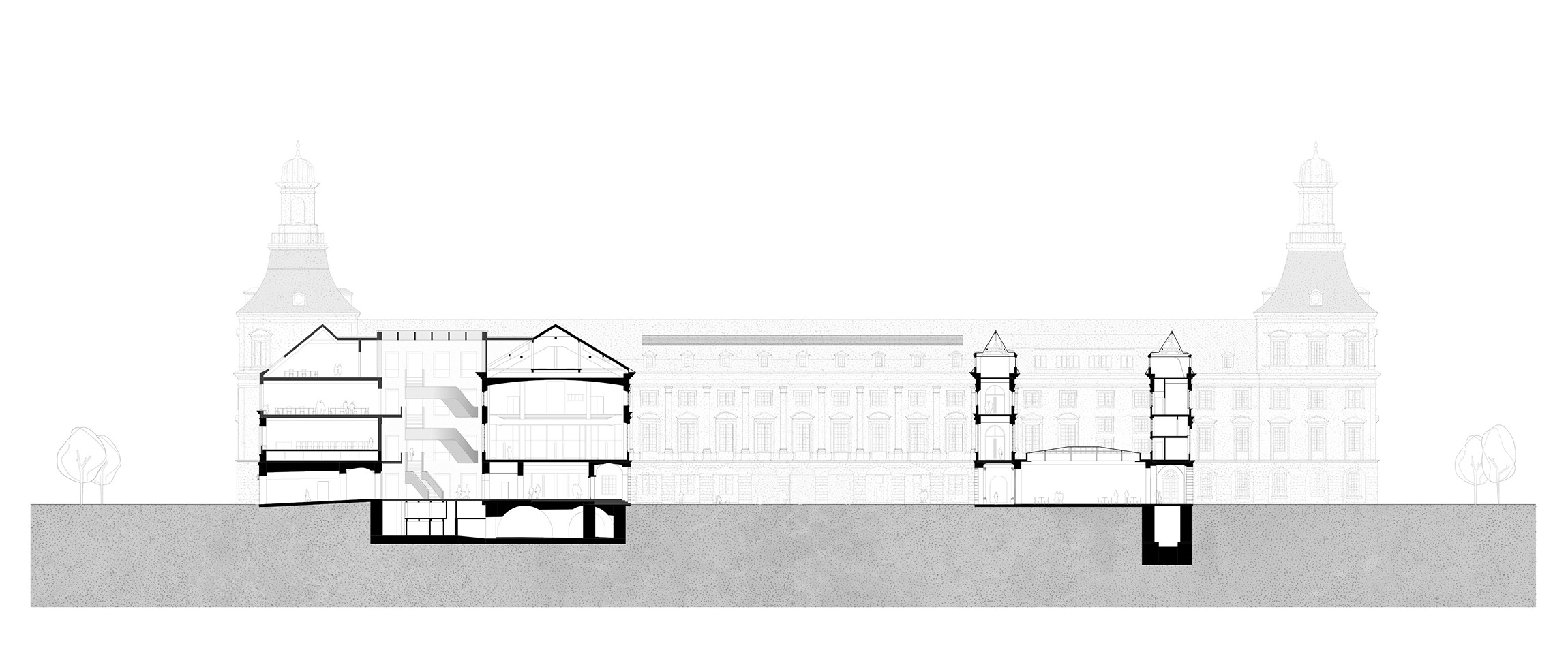
The listed spaces are preserved as witnesses of their time: the colonnaded hall, the palace chapel, the stairwells, the Aula. The new circulation concept brings clarity and legibility to the entire complex.
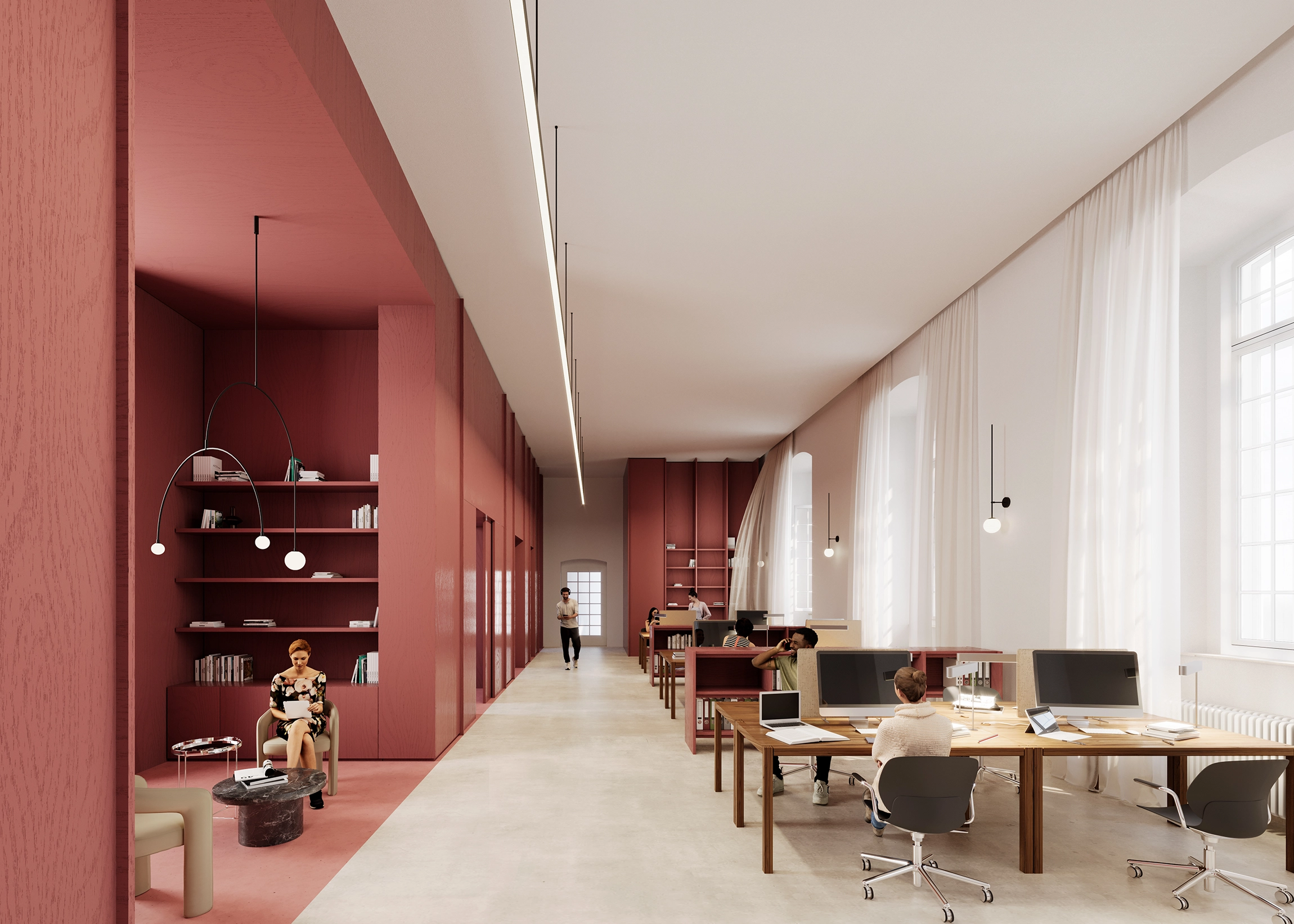
Office and communication areas follow the principles of New Work: flexible workspaces designed for knowledge exchange. A spatial furniture element, conceived as a shelving system, accommodates tea kitchens, individual offices, and meeting rooms, with open-plan areas on the opposite side. Each faculty is assigned a distinct colour for orientation purposes. In the main wing, green predominates at doorframes and along the sculptural staircase in the Lichthof.
Existing floor finishes are retained. New terrazzo in the circulation areas and timber parquet in seminar and office spaces complement the existing fabric. New materials are legible and timeless. The dialogue between old and new becomes visible, palpable, and inhabitable.
Design Quality: Old and New in Dialogue
Location
Bonn
Type
Urban Development
Client
Bau- und Liegenschaftsbetrieb NRW Köln
Time Frame
2025
Services
Competition Entry (Commendation)
Status
Concept
Visualization
&MICA