On the banks of the River Spree, where the Berlin Wall once cut through the water and where the city still bears the traces of division, a new place is emerging: the Berlin Border and Museum Harbor. An ensemble that does not enclose history behind walls, but opens it up within the urban fabric, creating space for remembrance, encounter, and everyday life.
Between Memory,
the Present,
and Public Life
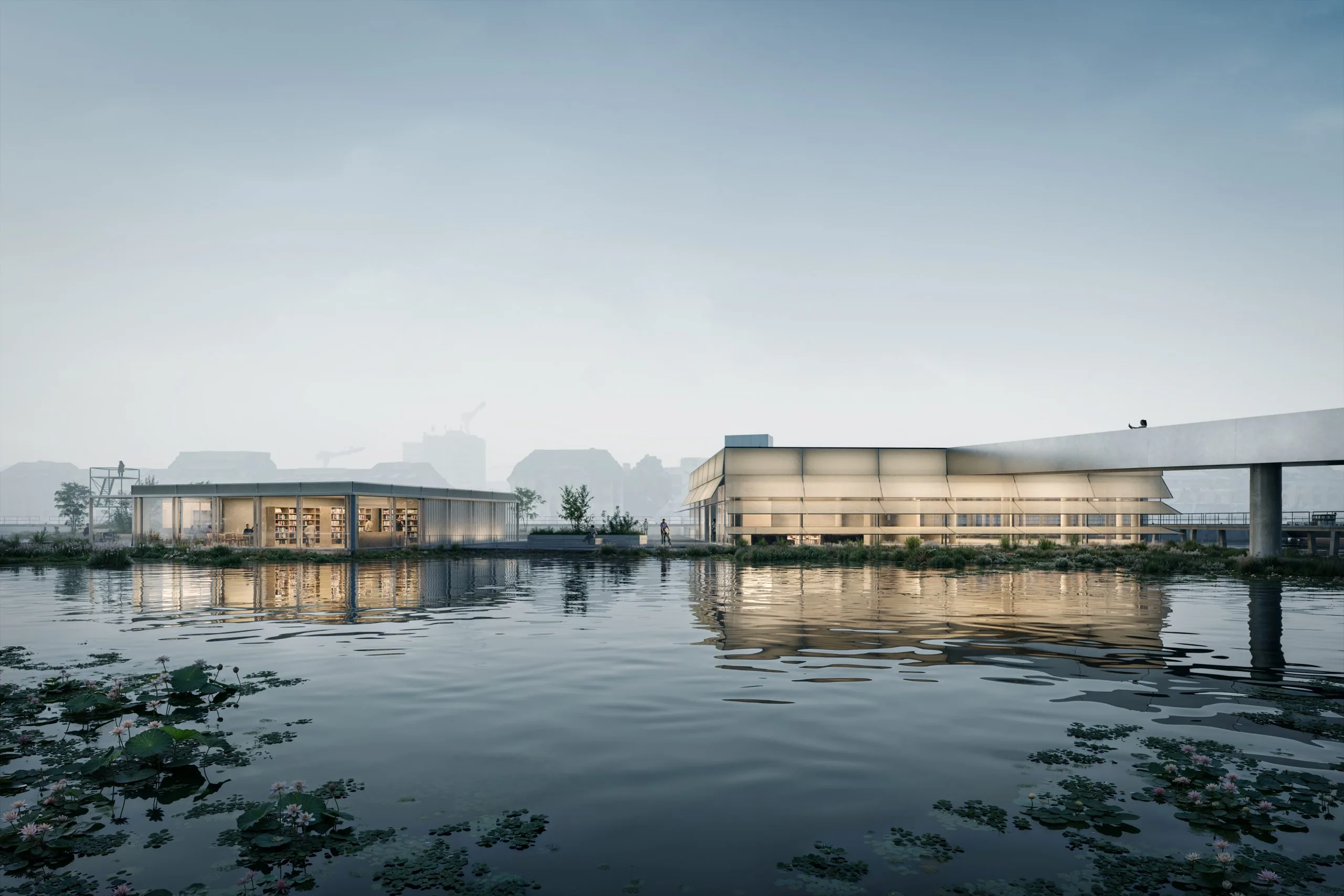
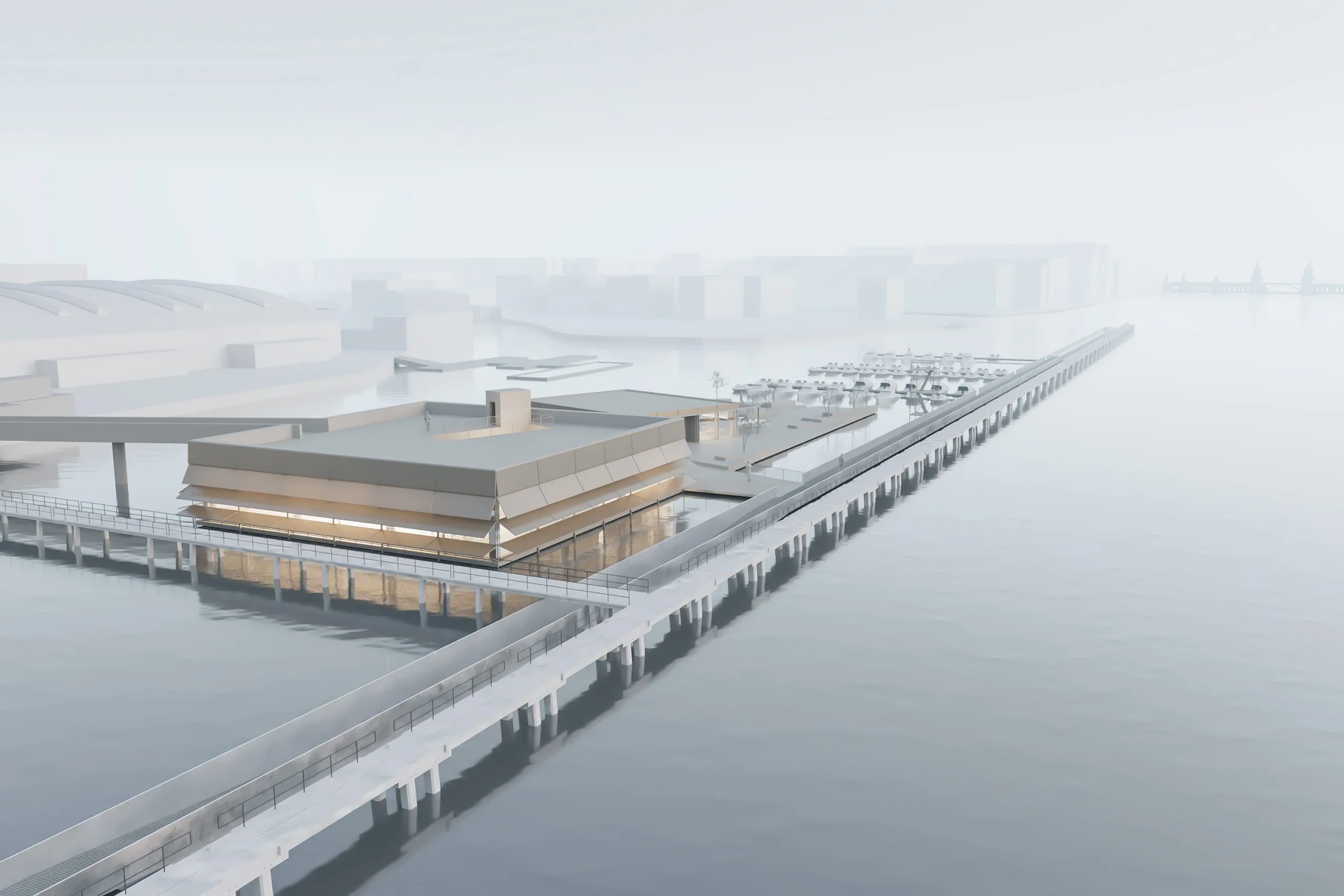
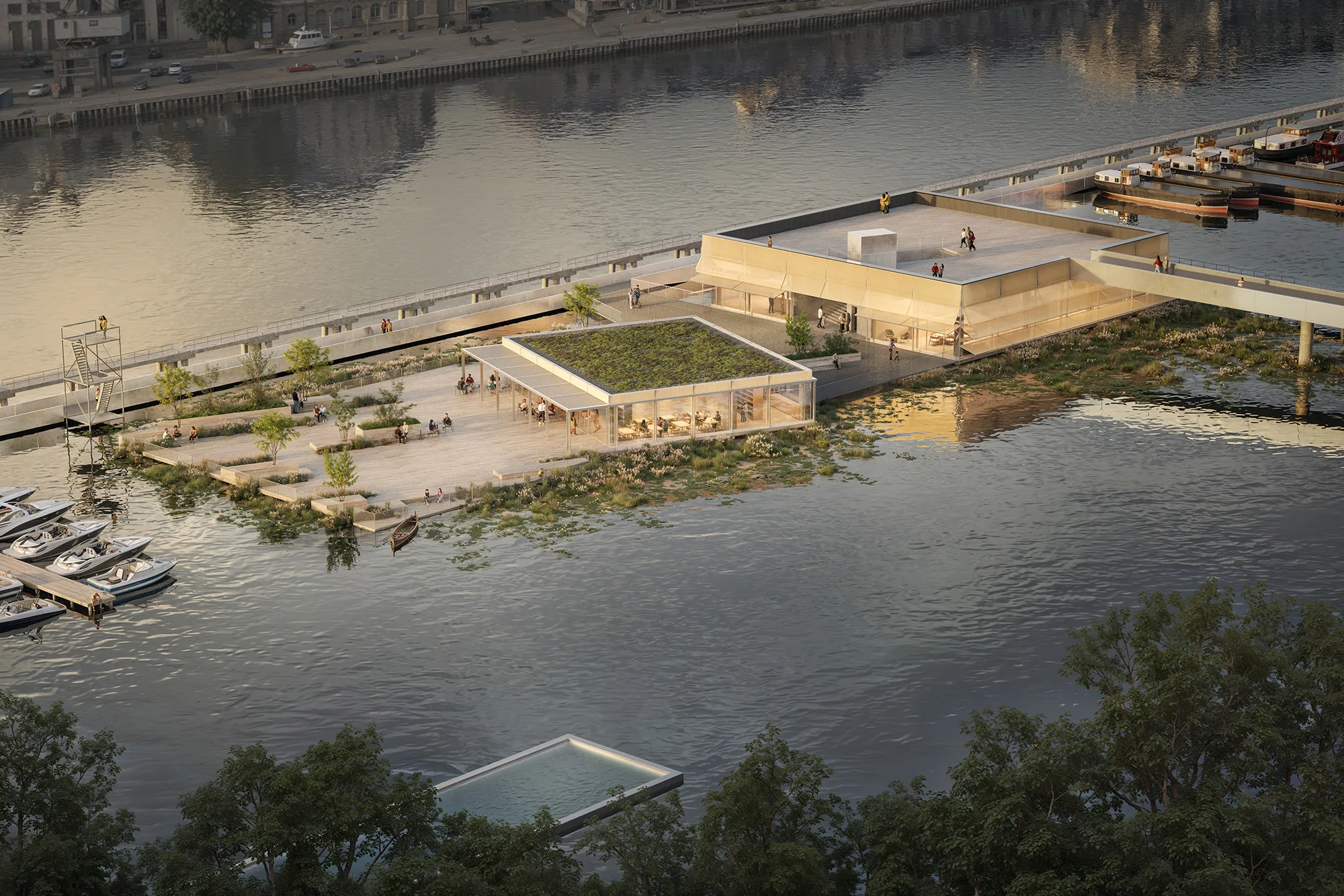
The design by &MICA develops an urban ensemble that interweaves memorial, museum, and public platform into a contemporary architecture on the water. At its center lies the historic border jetty, a silent remnant of division, preserved in its original state. Alongside it, a new jetty is introduced, framing, accompanying, and intensifying its presence. Together with the museum and a public platform, a network of spaces emerges that makes memory tangible without excluding everyday use. History is not frozen in a museological setting, but kept alive as part of the city’s social fabric.
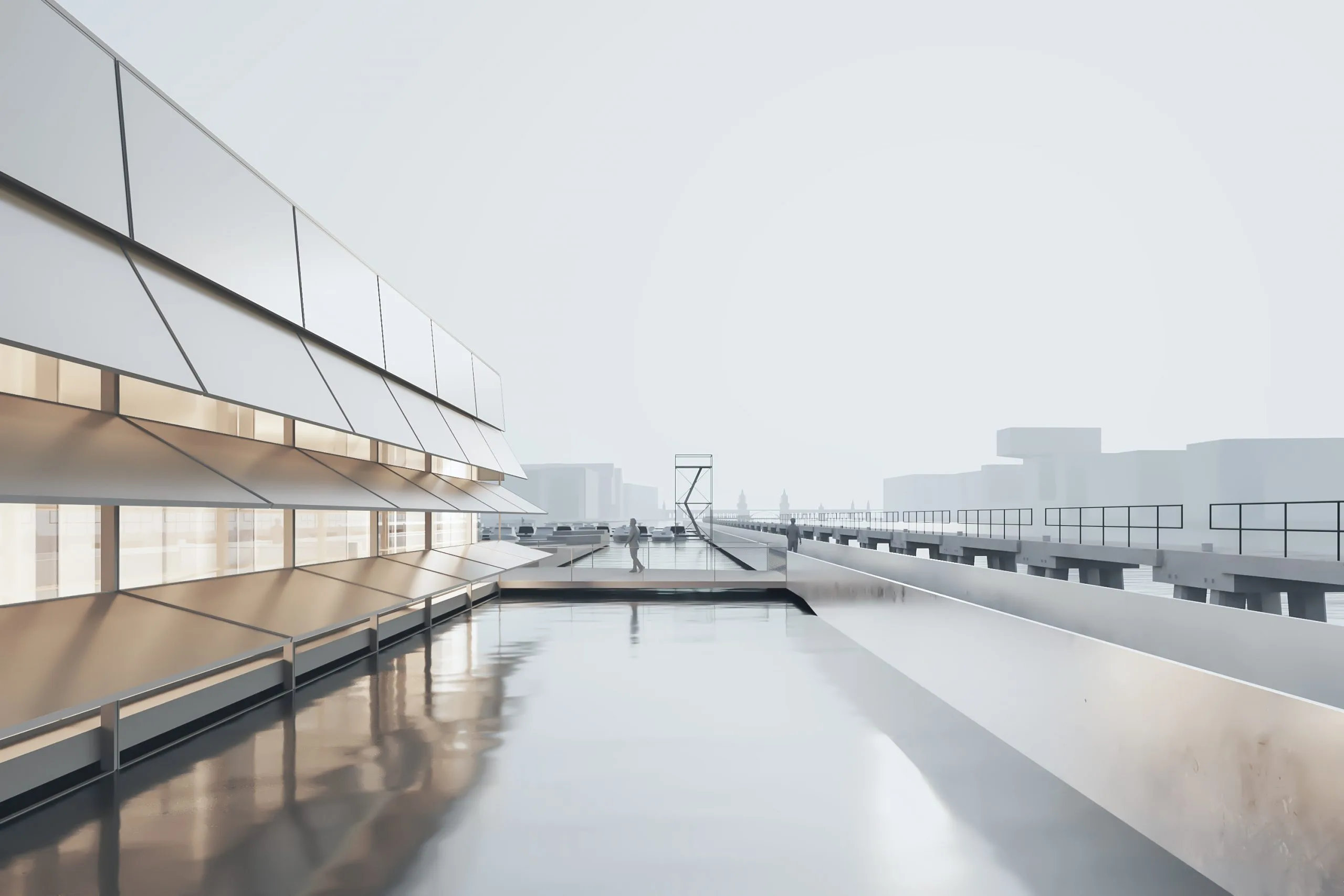
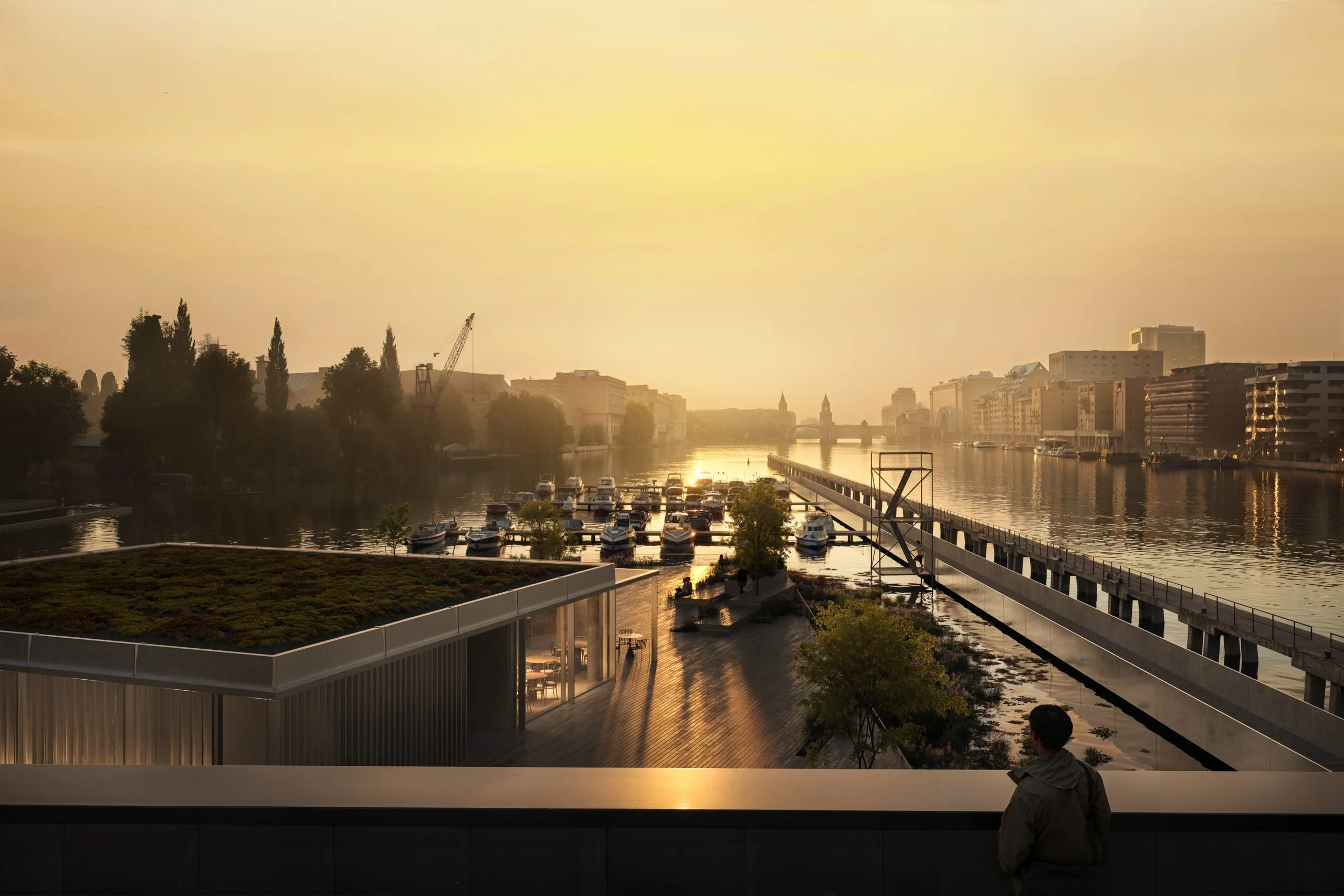
The new jetty hovers just above the water, light, restrained, and always positioned below the original structure. A gridded floor allows views down to the Spree, while solid side walls direct the gaze, fostering focus and intensity. Embedded fragments in the floor and railings, quotations, biographies, voices tell stories of fate, escape, and loss. Walking along the jetty becomes a physical experience of history, step by step. At the site of the former watchtower, a viewing point rises, transforming a place of control into one of openness and reflection.
The Museum: The Center of the Ensemble
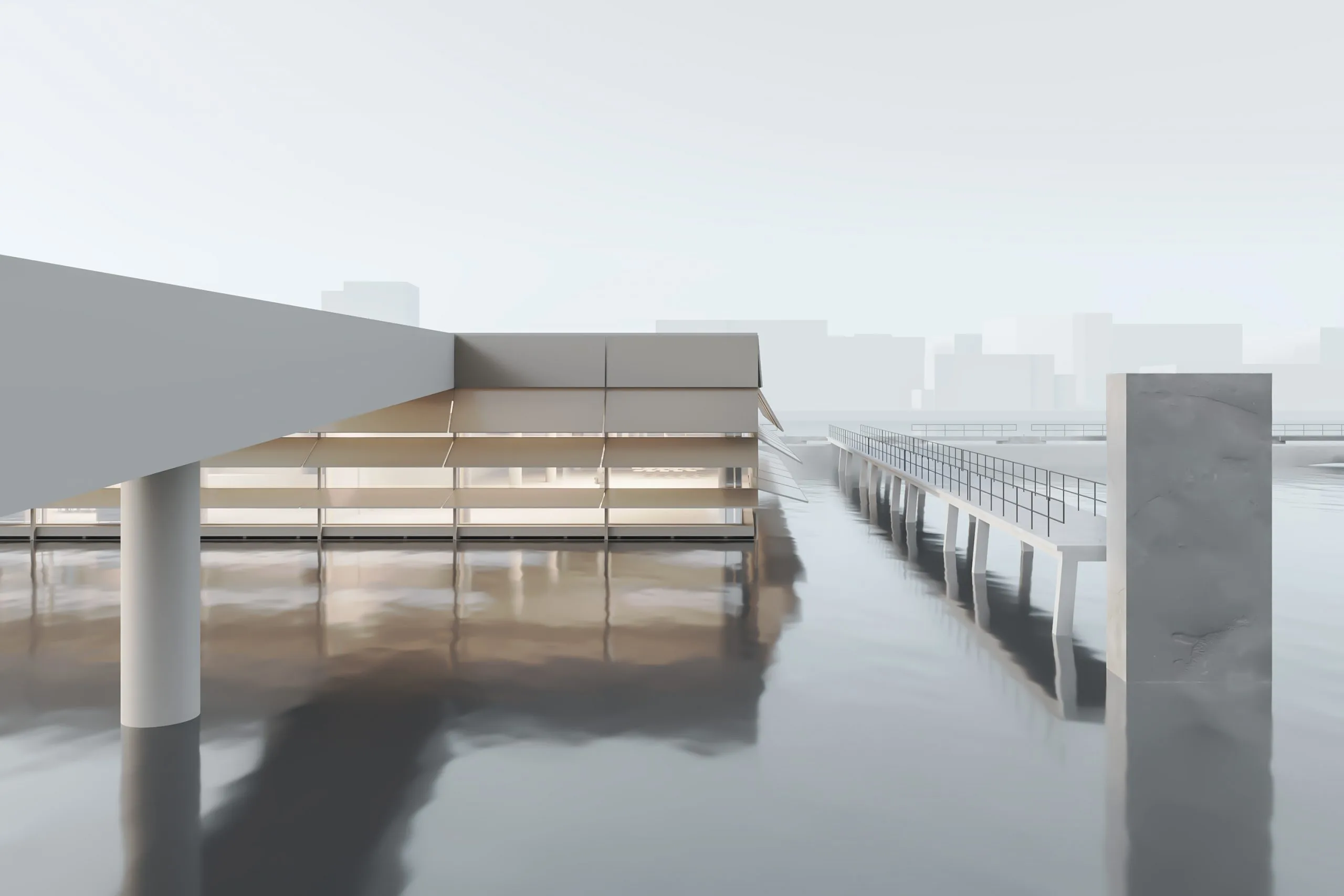
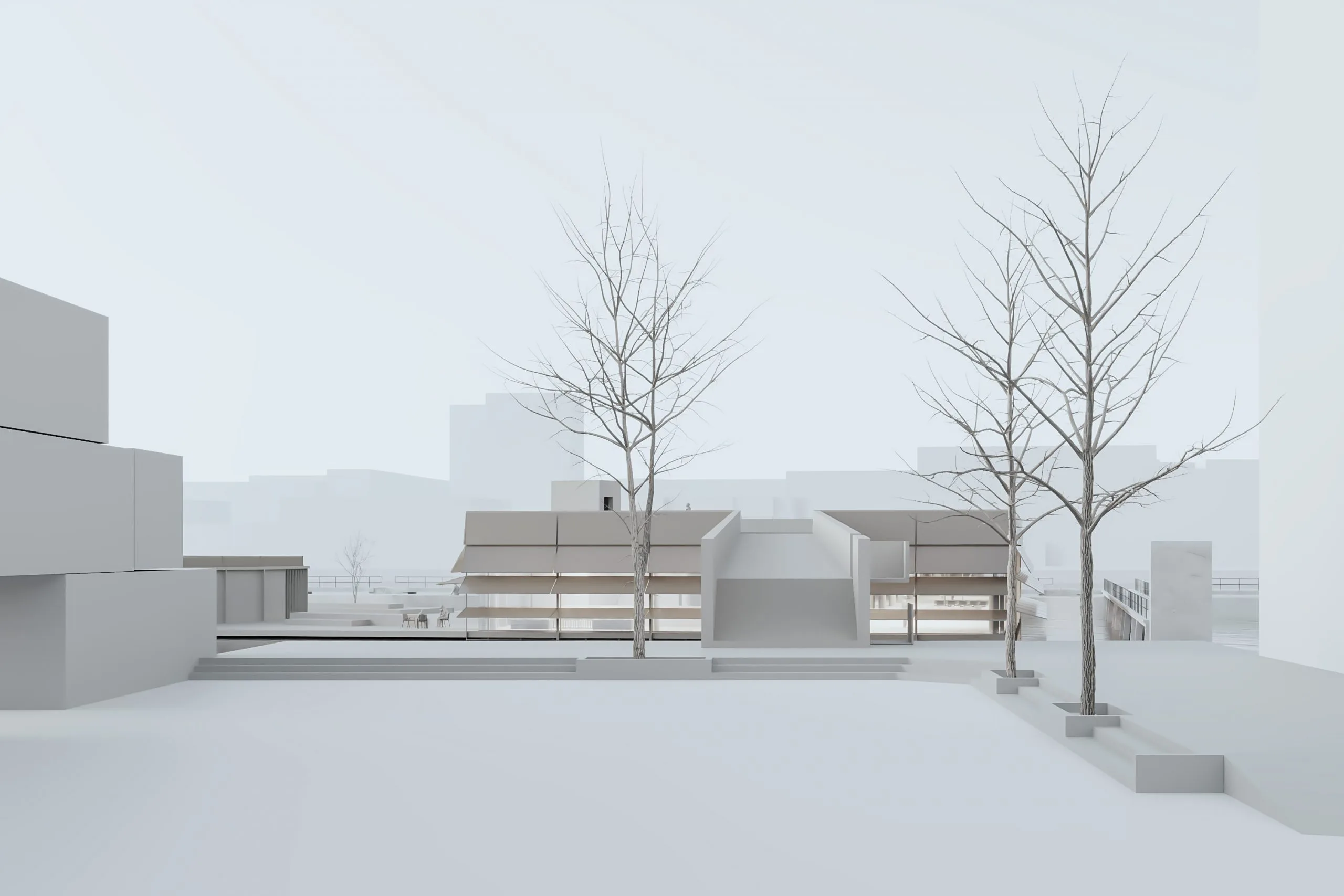
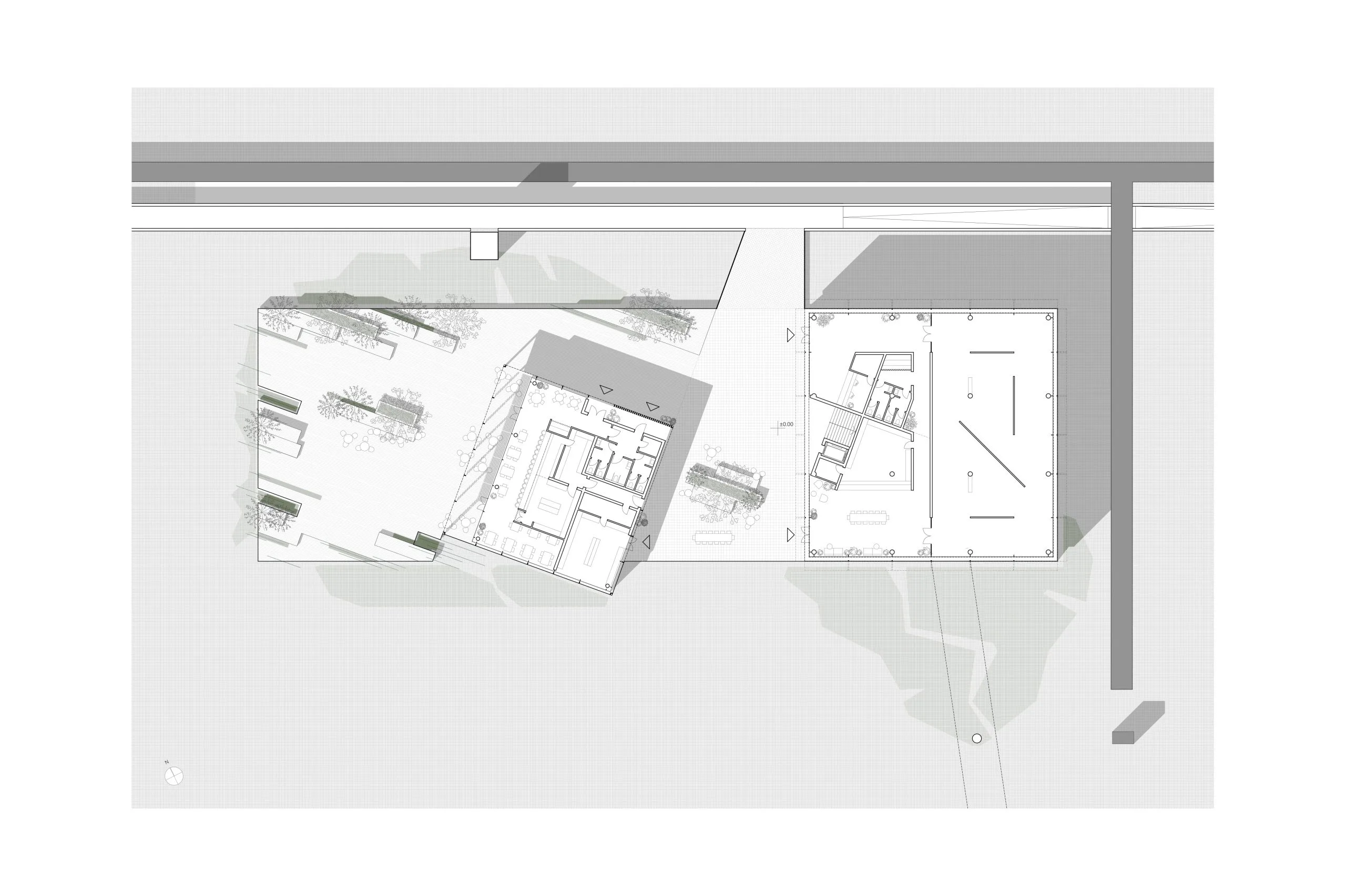
The museum marks the interface between remembrance and public life. A clear architectural volume is wrapped in a light, movable façade made of boat ropes, animated by wind and light, an echo of water, vessels, and currents. Behind it lies a flexible structure, alternating between openness and enclosure, adaptable to exhibitions, workshops, and events.
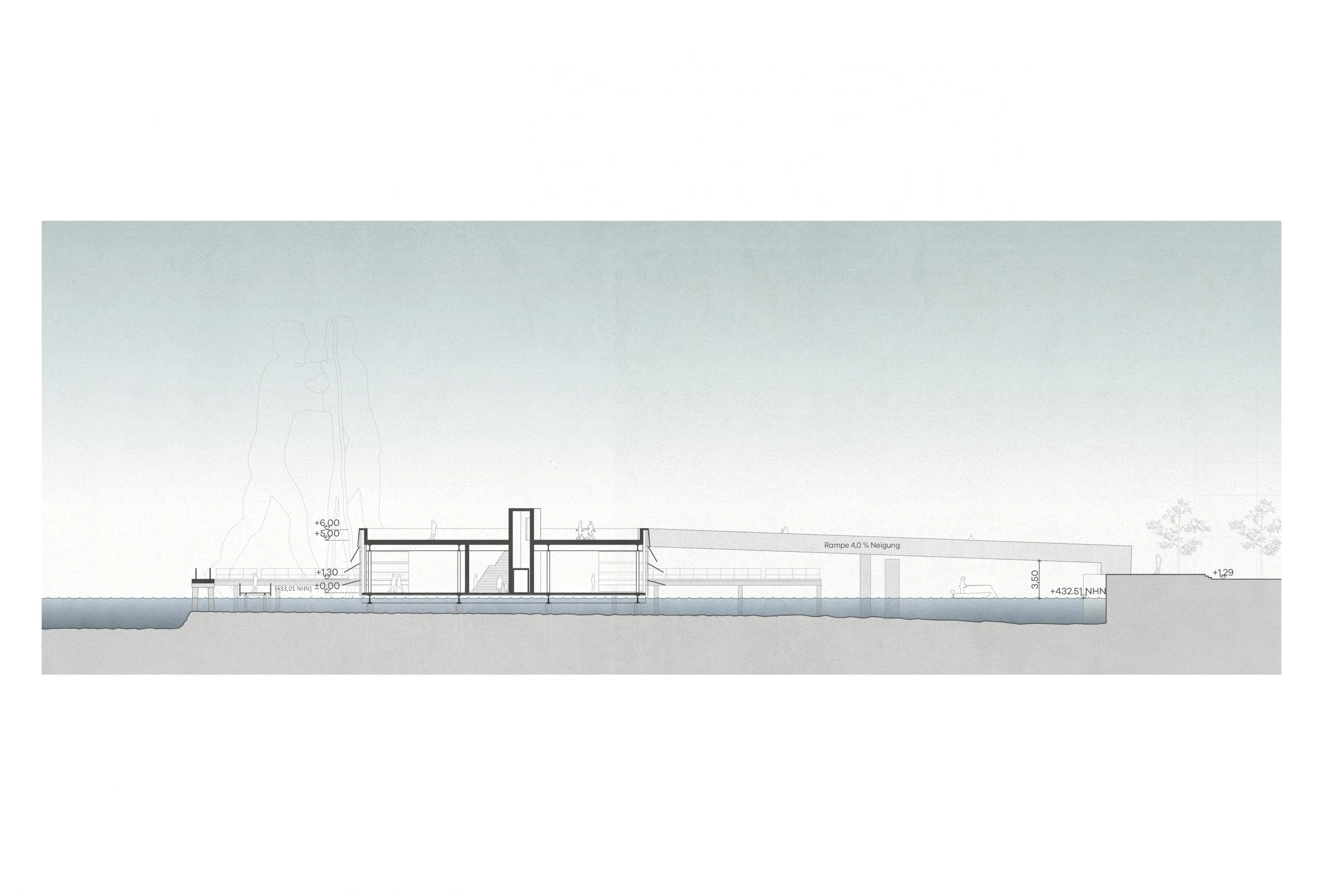
Access is provided via the walkable roof, itself part of the visitor route: a place for views, information, and encounters in the open air. At platform level, the building opens toward the water with a café and leisure areas. The museum thus becomes not only a space of reflection, but part of an urban architecture that actively shapes public space and invites the city’s inhabitants to engage.
The platform lies like an island on the Spree, open, green, and accessible. It connects memorial, museum, and leisure, inviting visitors to linger, stroll, play, eat, or paddle. Two boathouses frame the site: one housing a café with a terrace above the water, the other providing boat rental and infrastructure. Their typology references traditional boathouse architecture and blends atmospherically into the ensemble. Timber construction, wood–steel combinations, and open façades create a sense of lightness, warmth, and proximity to the water.
A space emerges where past and present intersect: those who come to relax encounter memory; those who seek history find a vibrant place rooted in contemporary urban life.
The Platform: A Space for Connection and Leisure
Construction: Designed for Permanence and Change
The platform spans approximately 2,430 m² and rests on a pile foundation of steel tubes, designed to be reversible and allowing for dismantling in accordance with cradle-to-cradle principles. A structural grid of bolted steel beams supports a non-slip timber deck that is both robust and easily demountable.
The museum itself is conceived as a steel skeletal structure, aligned with the grid of the platform. The boathouse is designed as a pure timber structure, warm, simple, and clear. The jetties follow the same logic as the platform: floating constructions of steel on steel piles, surfaced with fire-resistant grating.
In this way, the museum harbor becomes an example of sustainable construction and innovative architecture in Berlin, an ensemble that carries memory while thinking forward.
Integration into the Urban Context
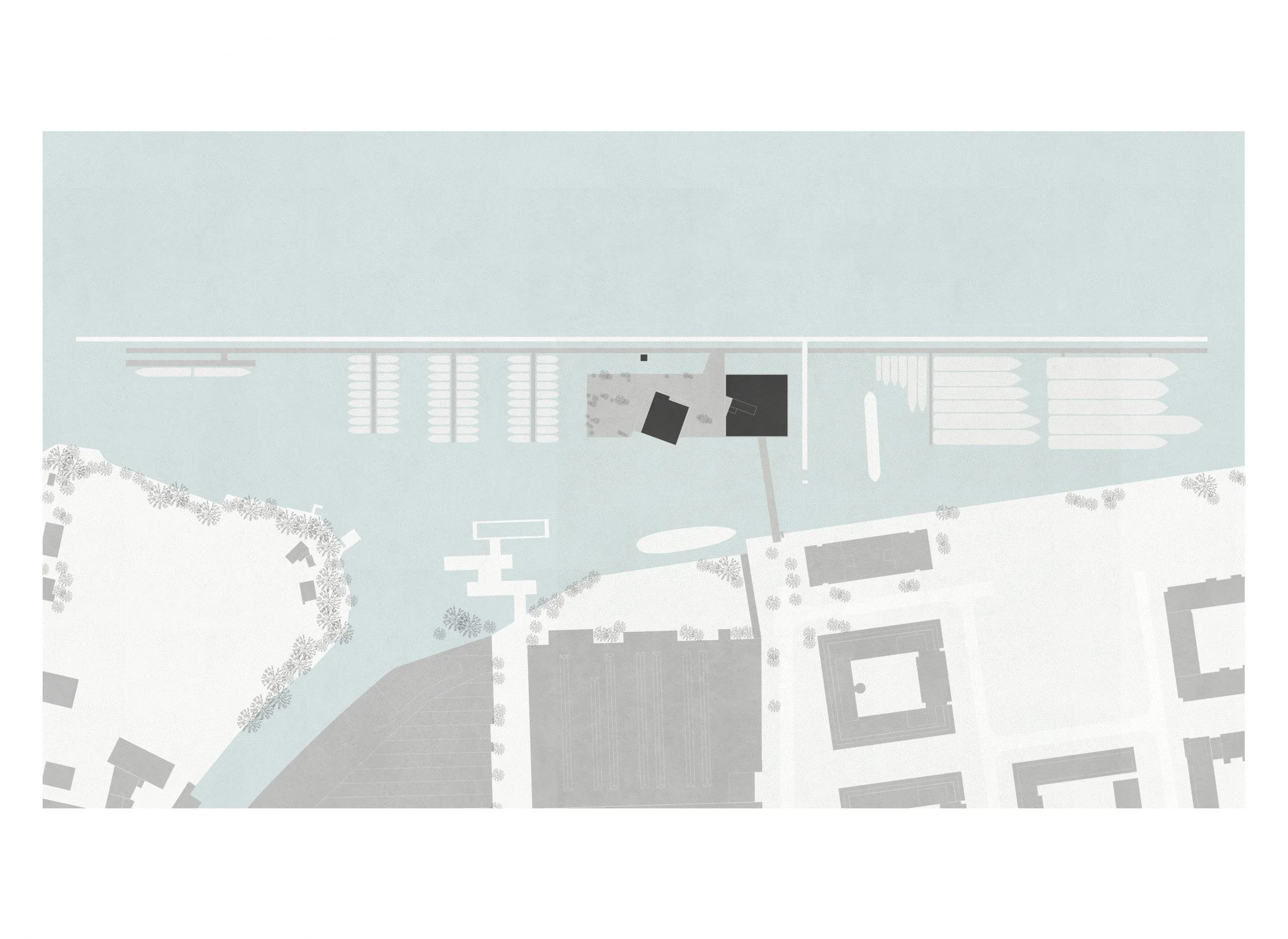
The Berlin Border and Museum Harbor is not conceived as an isolated object, but as part of a broader urban architecture embedded in a network of paths of remembrance. A new bridge extends Eichenstraße across the water, leading directly onto the museum roof and anchoring the site within the city. From here, a route unfolds along the former course of the Wall, passing the Schlesischer Busch watchtower, remnants of the Berlin Wall, and finally reaching the site. Information points at locations such as Oberbaum Bridge, the East Side Gallery, and Treptower Park embed the project within Berlin’s collective memory.
The Border and Museum Harbor thus becomes part of a larger narrative, not closed, but open. A place where the past remains present and where the city continues to question and reinterpret its history.
Location
Berlin
Type
Urban Design
Client
Grenzhafen Berlin GmbH & Stiftung Museumshafen
Time Frame
2025
Services
Design (Competition, Phase 2)
Status
Concept
Visualization
&MICA