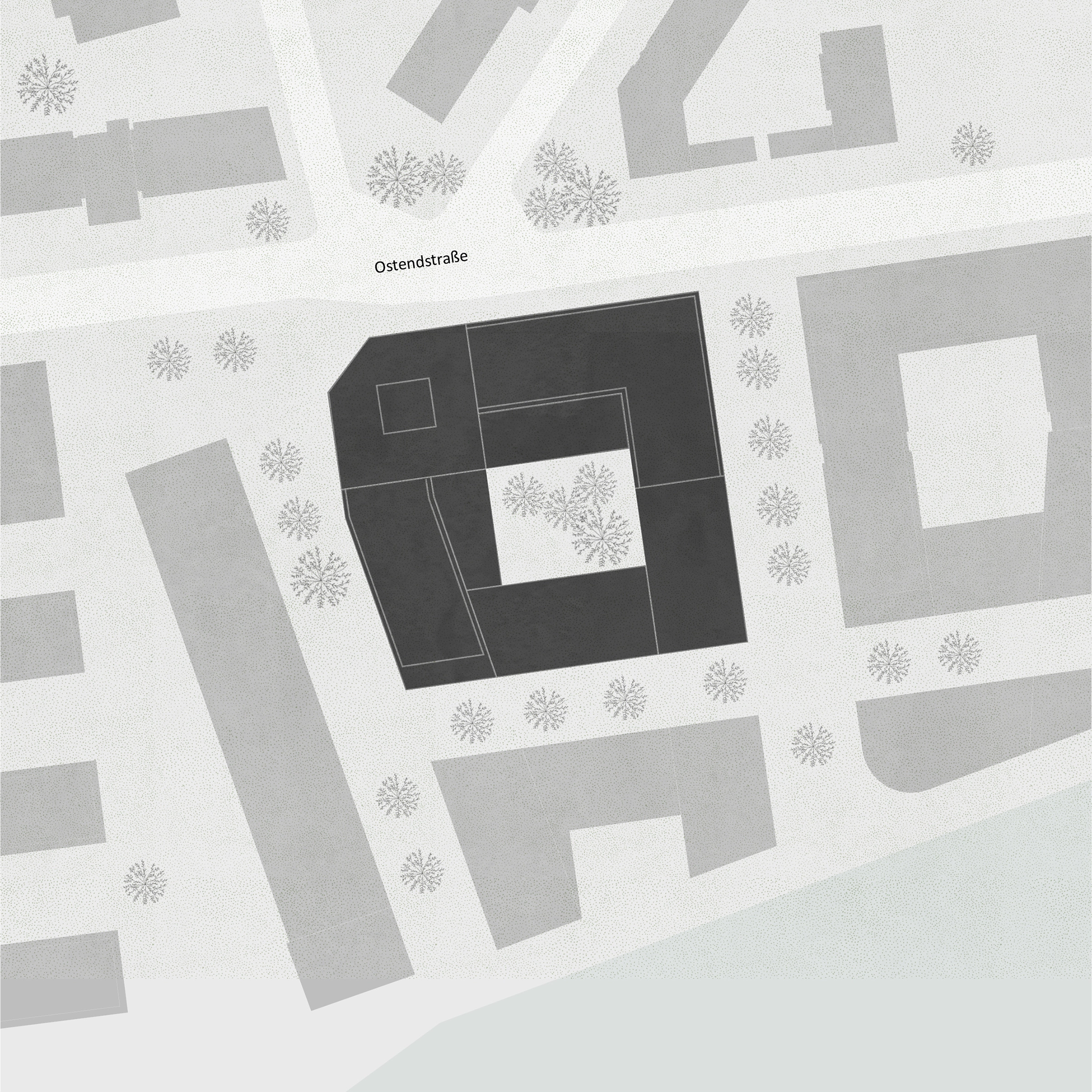
At the quarter square in the East Block, a landmark building of architectural significance is taking shape. A place for working, arriving, and exchanging. A place that creates identity and defines the northern edge of the quarter.
Our design creates spaces that can evolve. Floor plates that can grow. Structures that adapt. Long spans and a clear structural grid enable high space efficiency and a wide range of use scenarios. Office space, accommodation, food and beverage, and retail interlock seamlessly. A mixed-use concept designed for long-term programmatic diversity. The result is a building capable of responding to new demands. A building that endures because it can change.
Building for a Strong Address
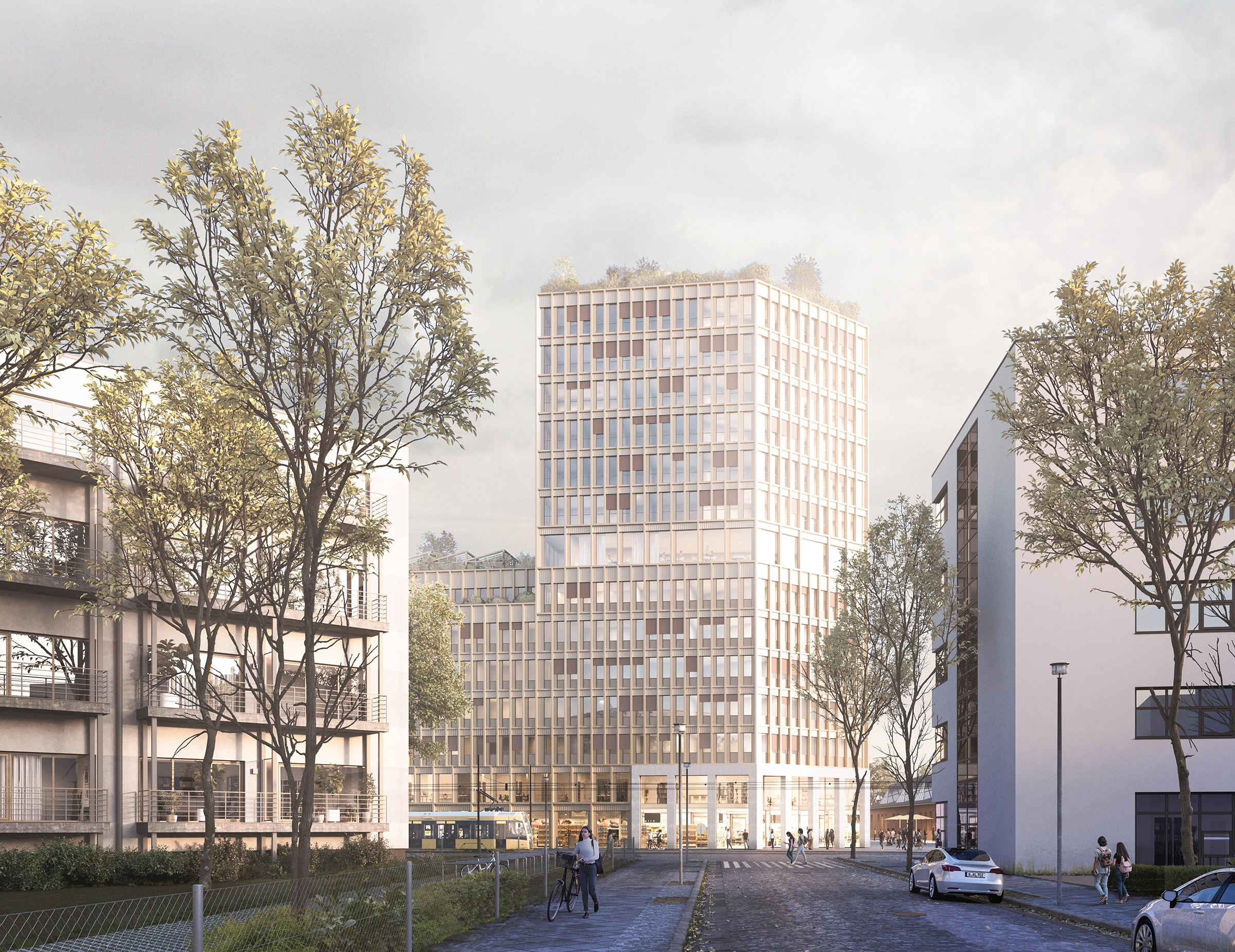
As the northern gateway of the quarter, the building assumes a distinctive role within the urban fabric. It provides orientation. It gives the place a face.
The clear massing, the industrial architectural language, and the precise proportioning lend the structure a high degree of recognizability. Materials and details reference the history of the site and translate it into a contemporary architecture with identity.
A building that fits in — and stands out at the same time.
Building for Vibrant Use
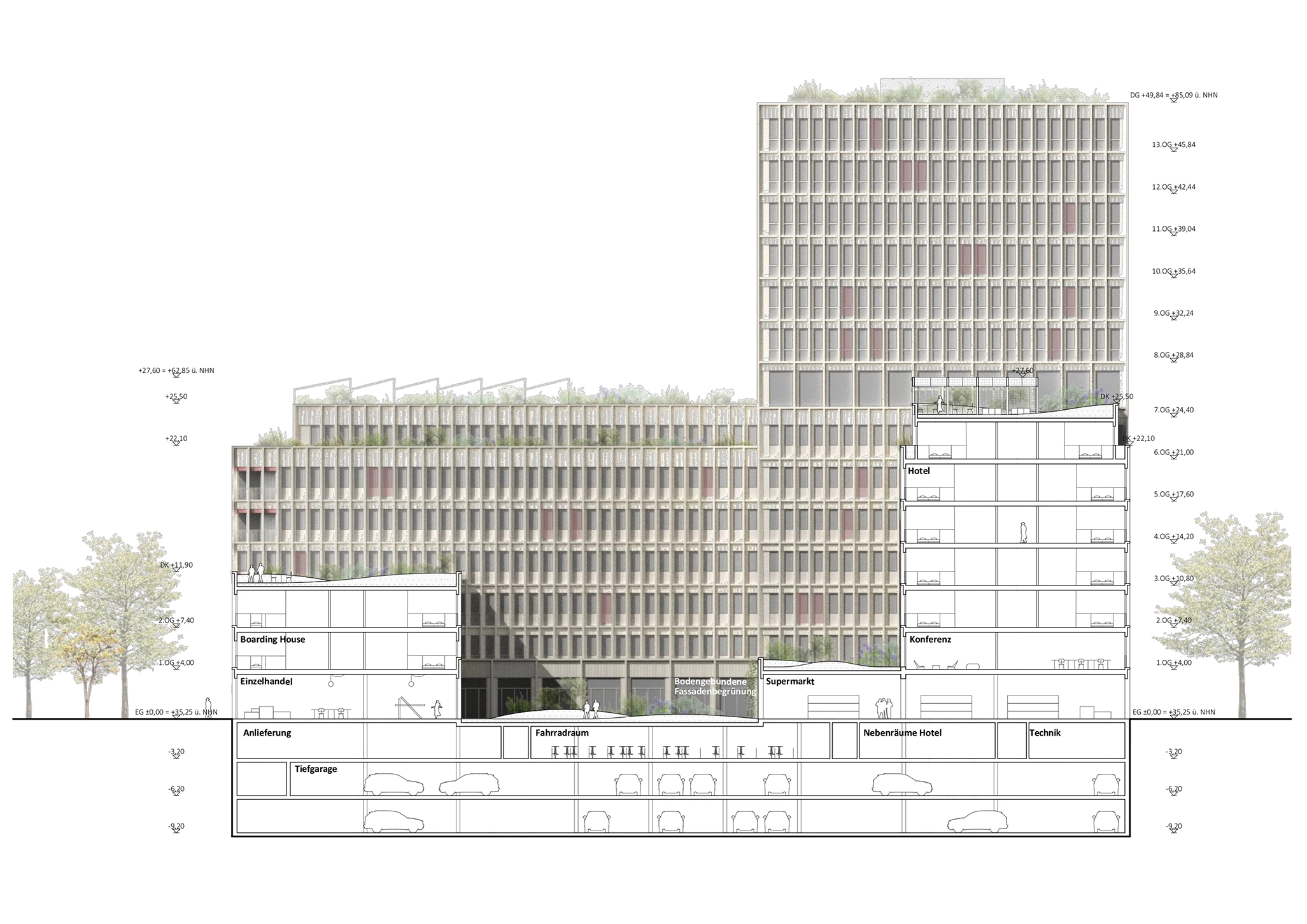
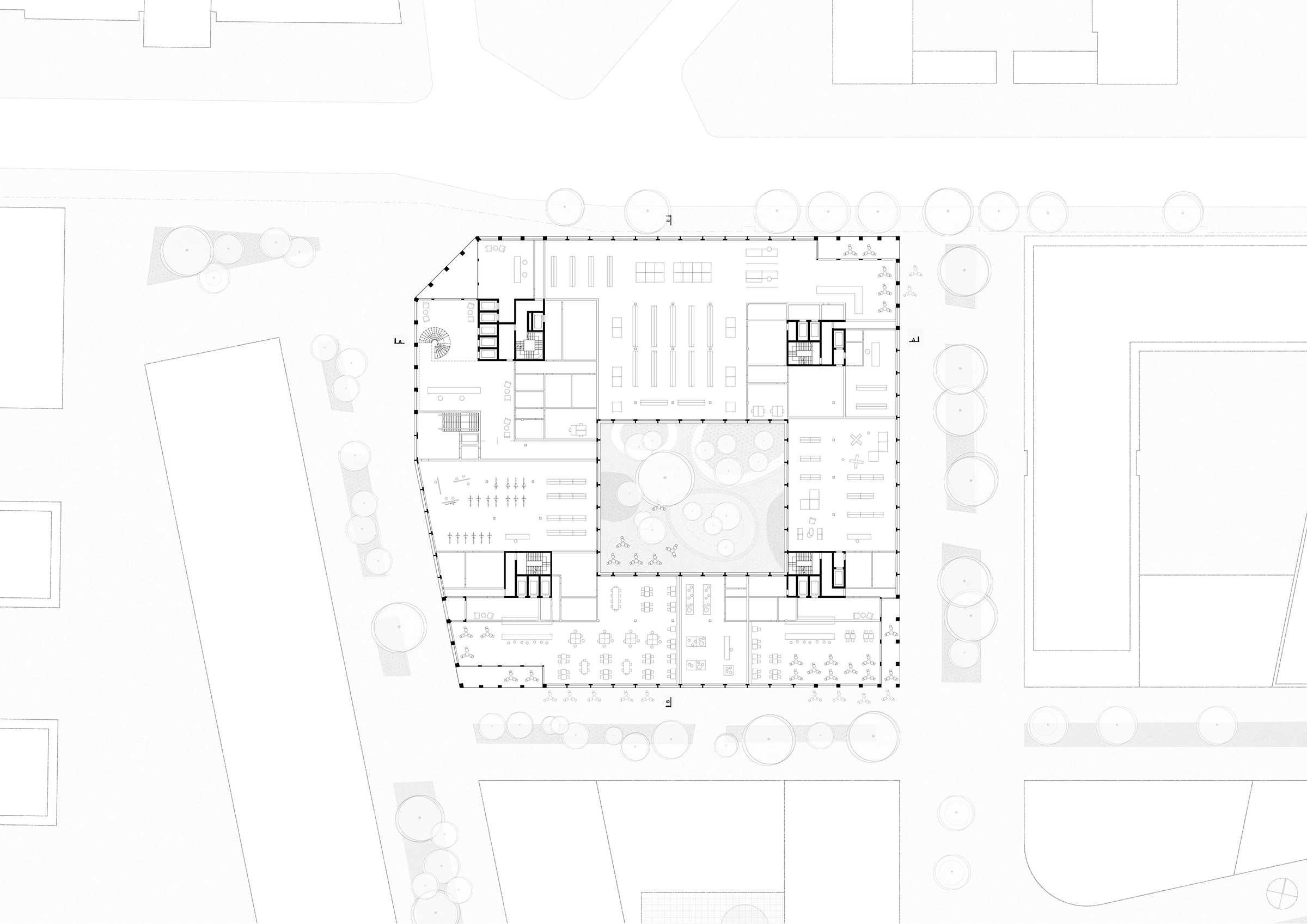
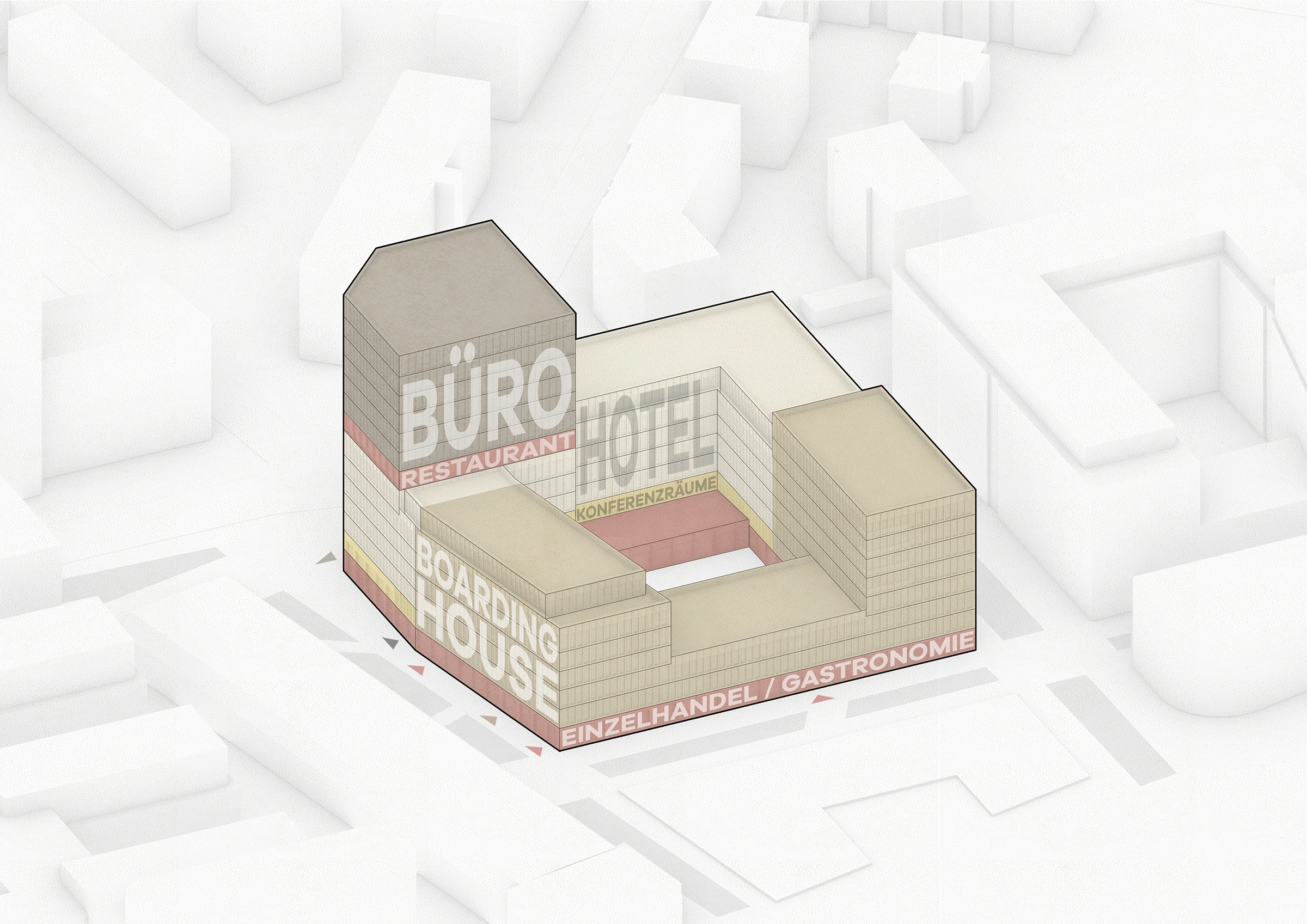
The building brings together hotel, boarding house, office space, food and beverage, and retail into a coherent whole. A considered mix of uses that generates synergies and activates the quarter.
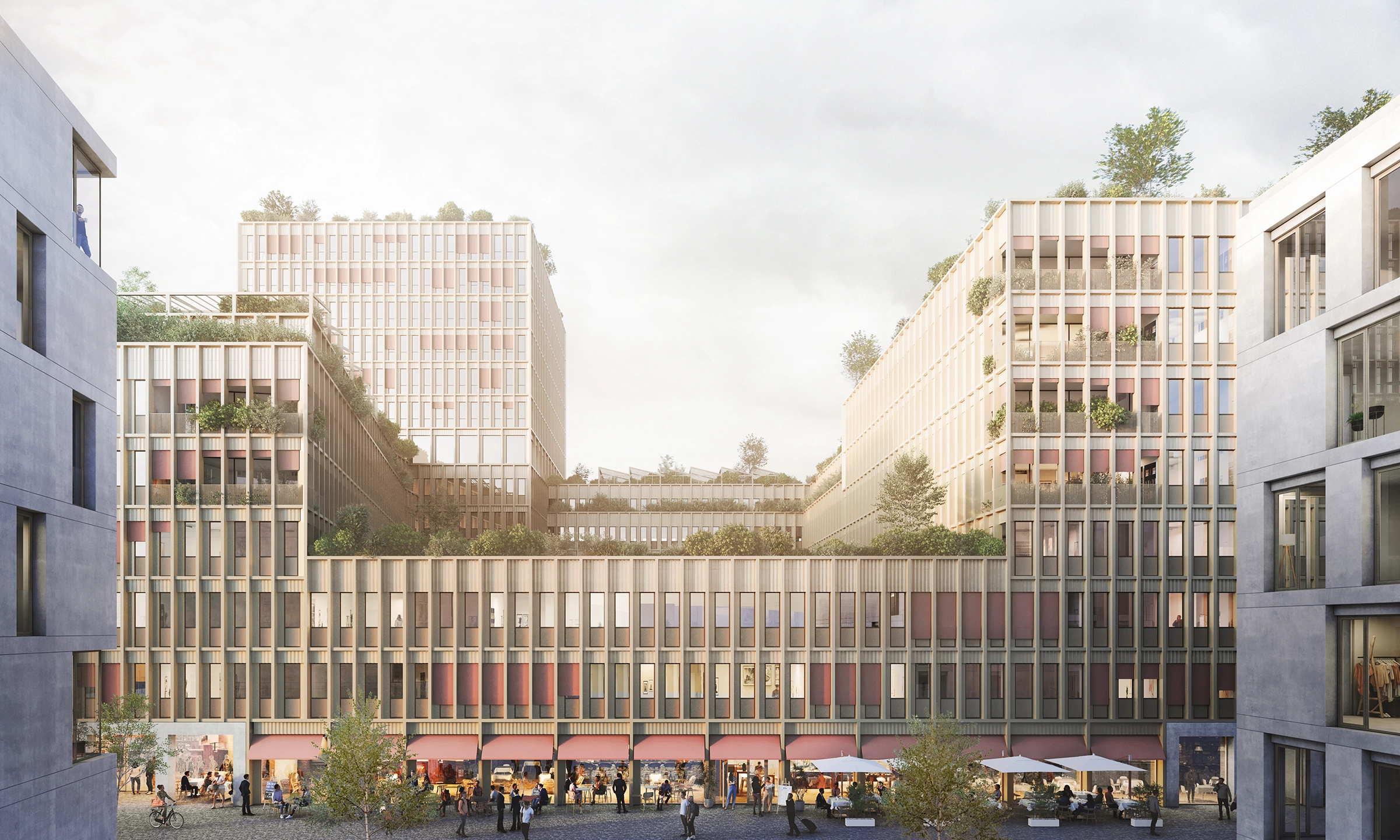
At ground level, restaurants and retail open toward the public realm. Generous entrances and transparent façades connect interior and exterior.
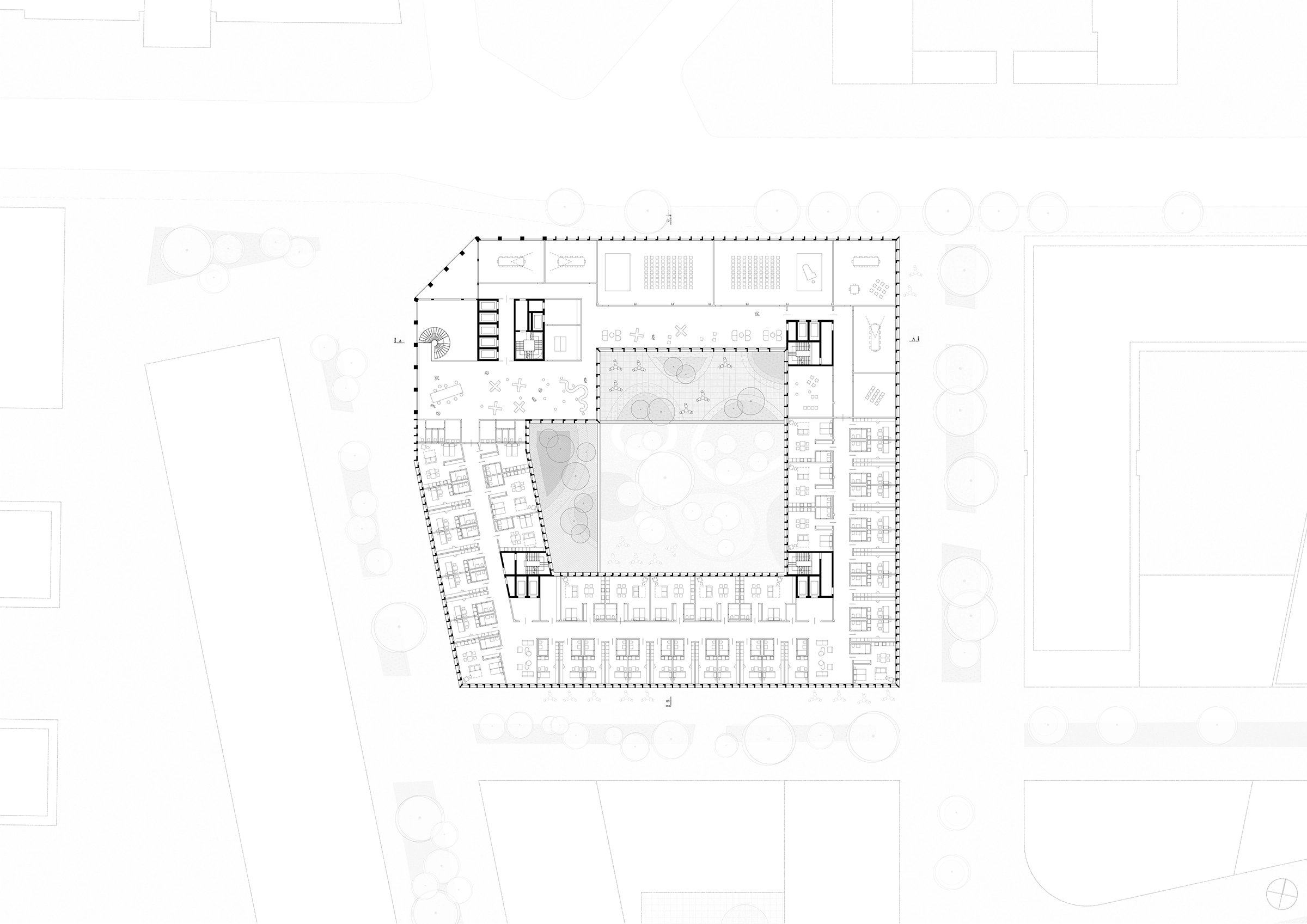
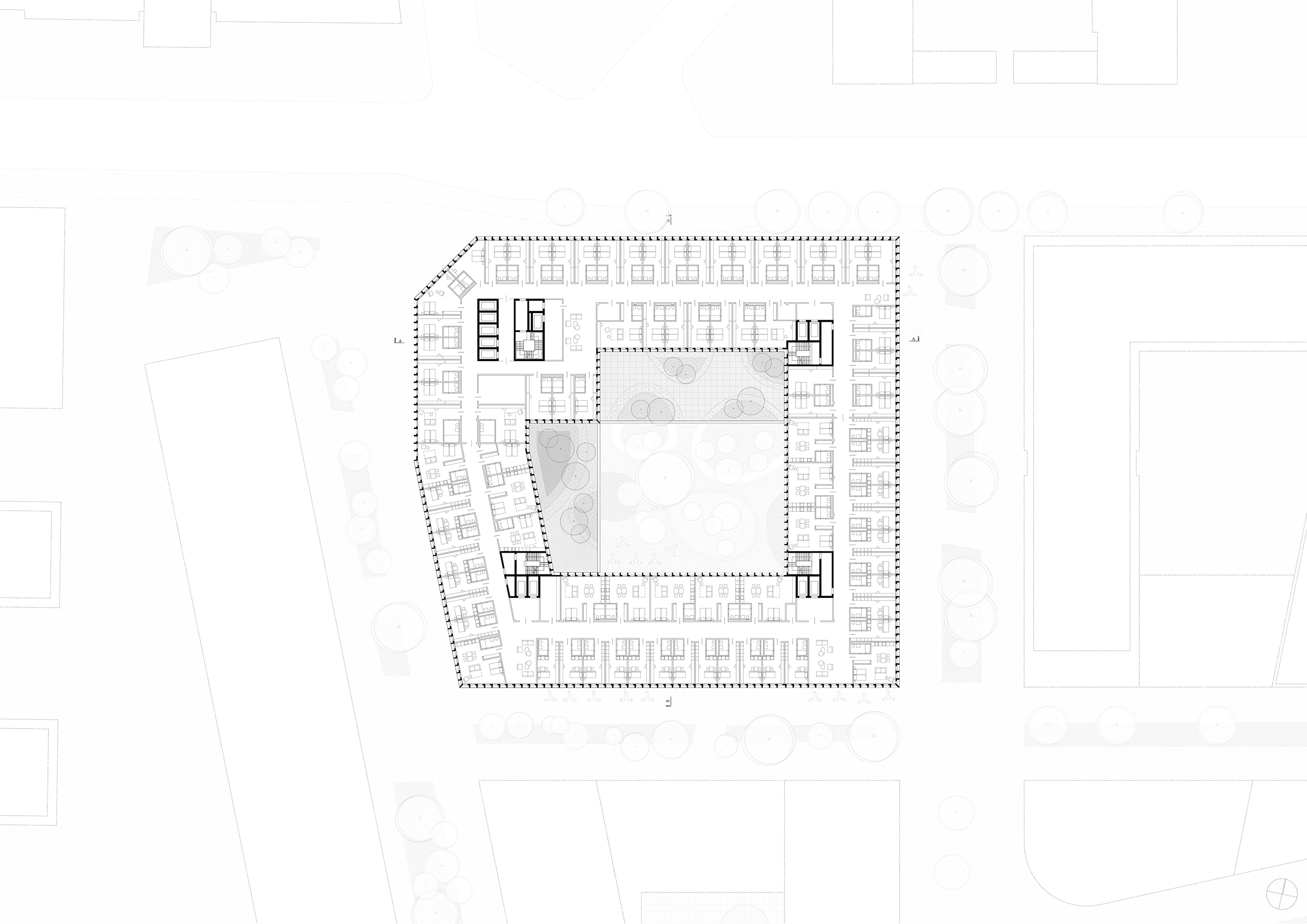
Above, the accommodation program unfolds: a hotel with conference facilities and a boarding house in the form of modern serviced apartments.
In the upper floors, flexible workspaces for new ways of working emerge. Open, adaptable, communicative. A restaurant at the transition between podium and tower connects the uses. With a roof terrace and views over the Spree, it becomes a meeting point for all.
Building for a Clear Structure
Four building cores organize the structure. They provide efficient vertical circulation. They ensure legibility. They meet the requirements of contemporary high-rise planning.
Circulation routes are clear. Functions are logically arranged. Every use finds its place — and remains part of the whole.
Building for a Strong Façade
The façade is more than an envelope. It is order. It is expression. It is identity.
A regular grid establishes calm and clarity. Arcades at ground level open the building to the street. Loggias and recesses add depth and articulation.
The rear-ventilated, rainscreen façade system combines glass and metal into a high-performance building envelope. It is durable, low-maintenance, and energy-efficient.
Passive shading, operable windows, and natural ventilation improve indoor climate and reduce energy demand a meaningful contribution to energy-conscious architecture. Landscaped courtyards and green roofs create amenity and support biodiversity
Building for Structure and Efficiency
The load-bearing structure follows a clear principle: a skeleton of columns and cores.
Timber-concrete composite slabs combine structural performance with resource efficiency. They enable long spans and reduce material input.
The result is a construction system that is efficient. Economically viable. And structurally robust for the long term in the spirit of sustainable real estate development.
Building for Safety
The building meets all requirements of contemporary fire protection. Clear fire compartments, safe egress routes, and building services systems ensure a high standard of safety. Pressurized stairwells and firefighting lifts are an integral part of the design. All escape routes lead clearly and directly to the exterior.
Building for Comfort
The building offers quality in everyday use. For guests. For occupants. For visitors.
Generous spaces, ample daylight, and flexible floor plans create a high standard of amenity. Different ways of working and living find their place here.
Natural ventilation, optimized acoustic performance, and comfortable thermal conditions ensure a balanced interior environment.
Building for Active Roofscapes
The roof levels become new inhabited spaces. Places with views. Places with added value.
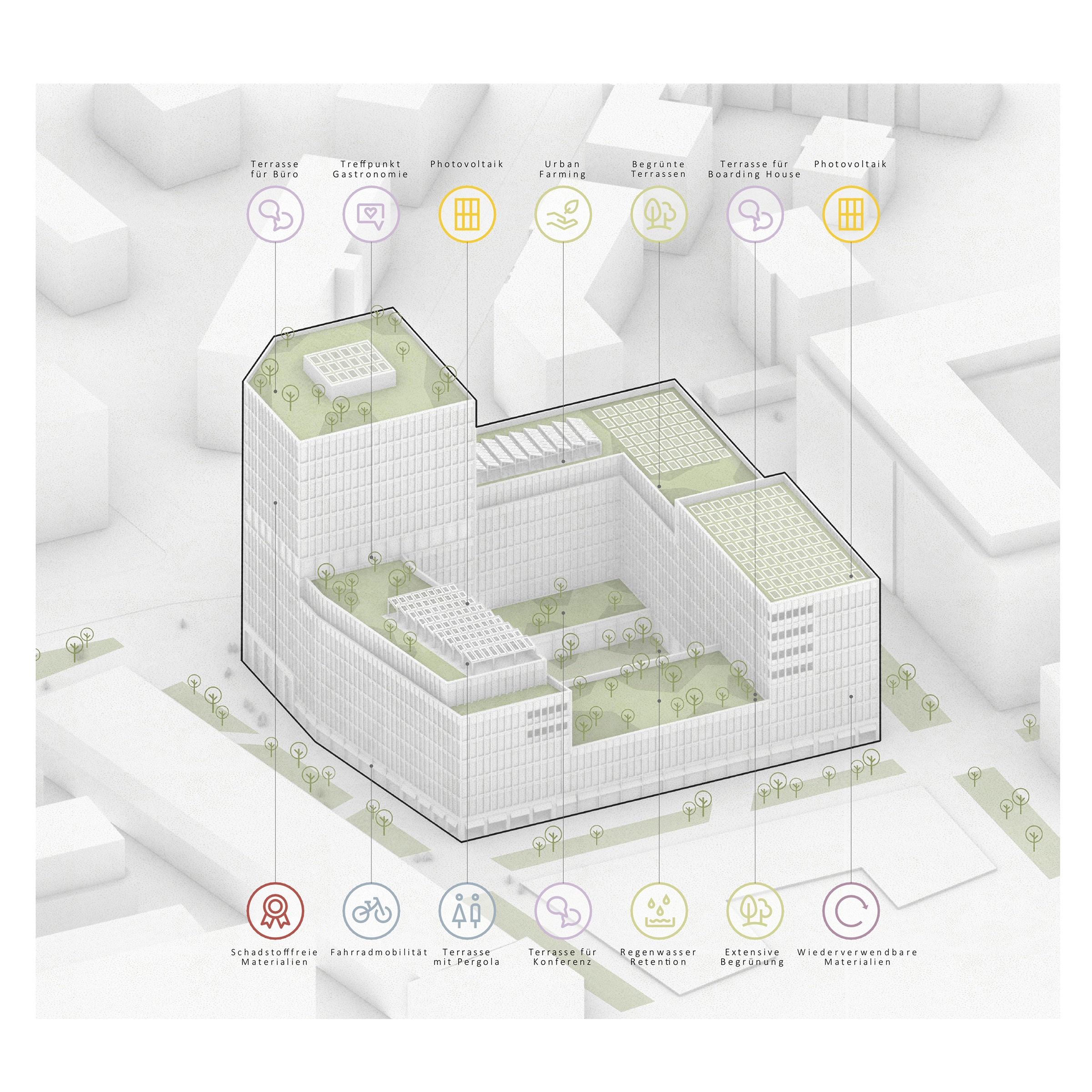
Roof terraces, green roofs, and photovoltaic installations combine amenity with energy generation.
New usable areas are created and a contribution to sustainable urban development is made.
Building for Sustainability
Sustainability is integrated from the outset. Ecologically, economically, and socially.
Green surfaces improve the microclimate. Retention roofs store rainwater in line with sponge city principles. Recyclable materials and low-carbon construction products support decarbonization in the built environment.
An energy-efficient building concept reduces consumption and increases long-term economic viability. The result is a building that takes responsibility. And builds for the future.
Building for a Climate-Resilient City
Rainwater is collected, retained, and reused. Green roofs and façades reduce urban heat islands and relieve pressure on infrastructure.
The building becomes part of a larger system. Part of a city responding to climate change. And part of an architecture that thinks ahead.
Location
Berlin
Type
Residential and Office
Client
DIE Deutsche Immobilien Entwicklungs AG
Time Frame
2024
Scope of Services
Design (Competition — 3rd Prize)
Project Status
Design
Visualisation
&MICA