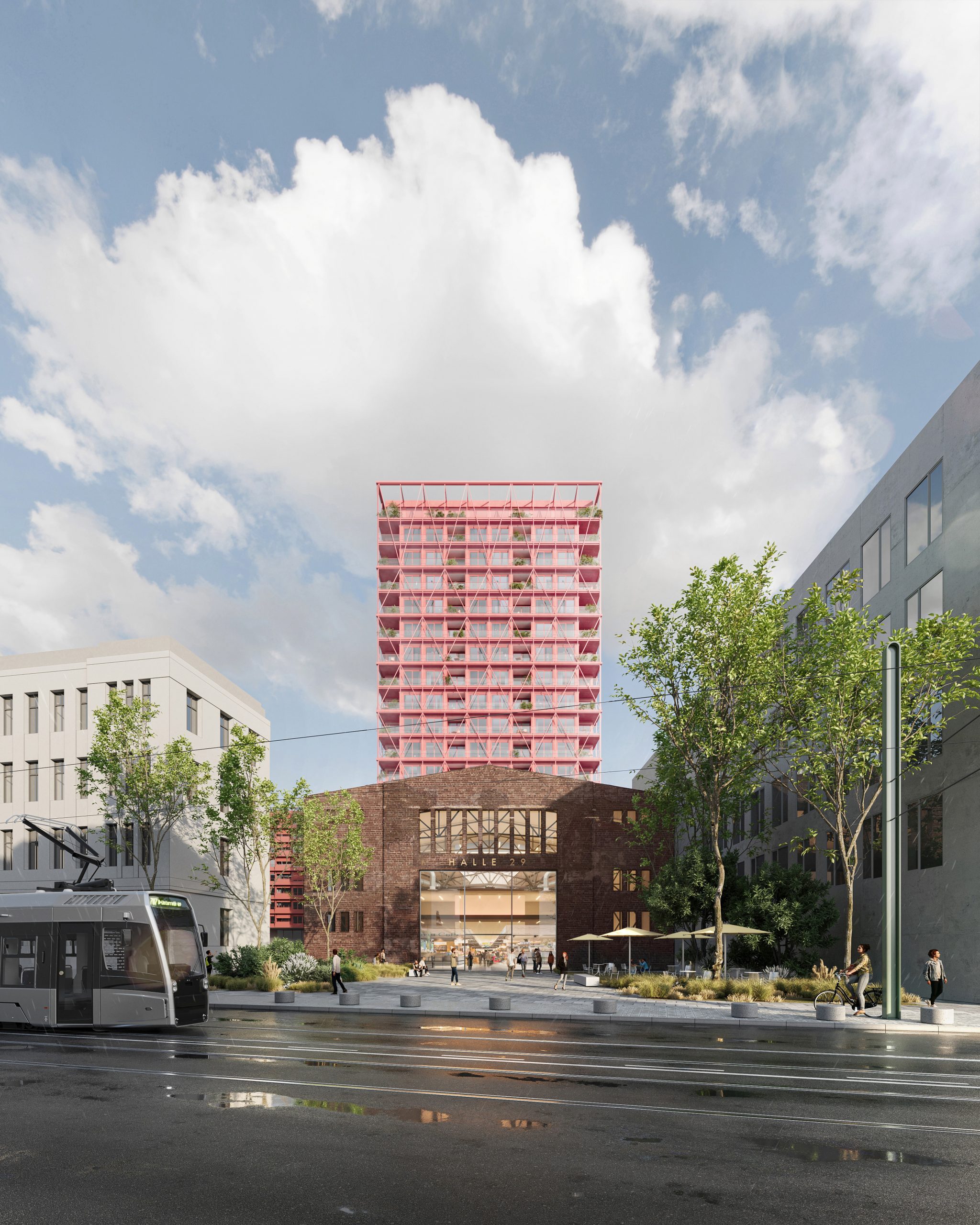
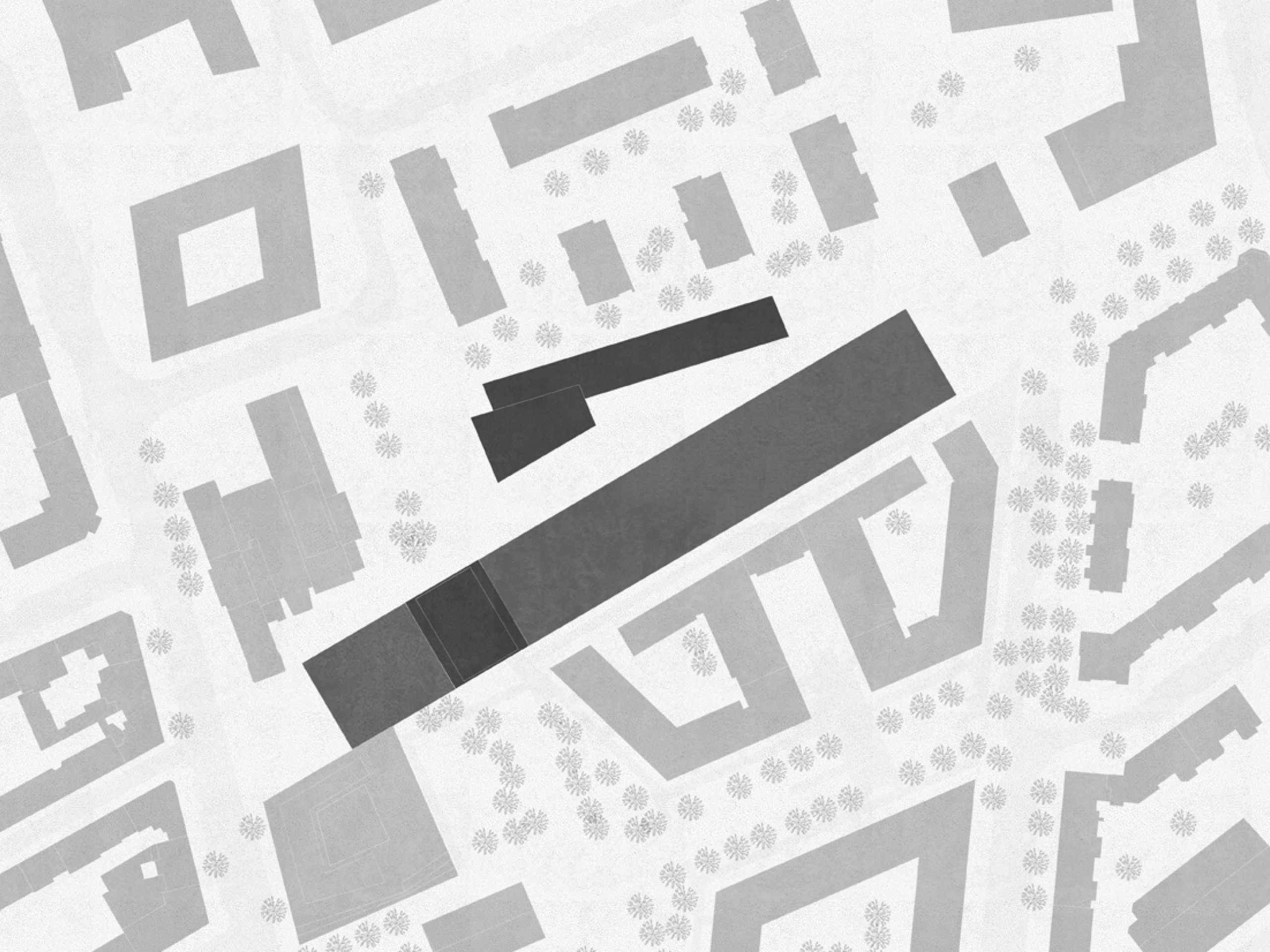
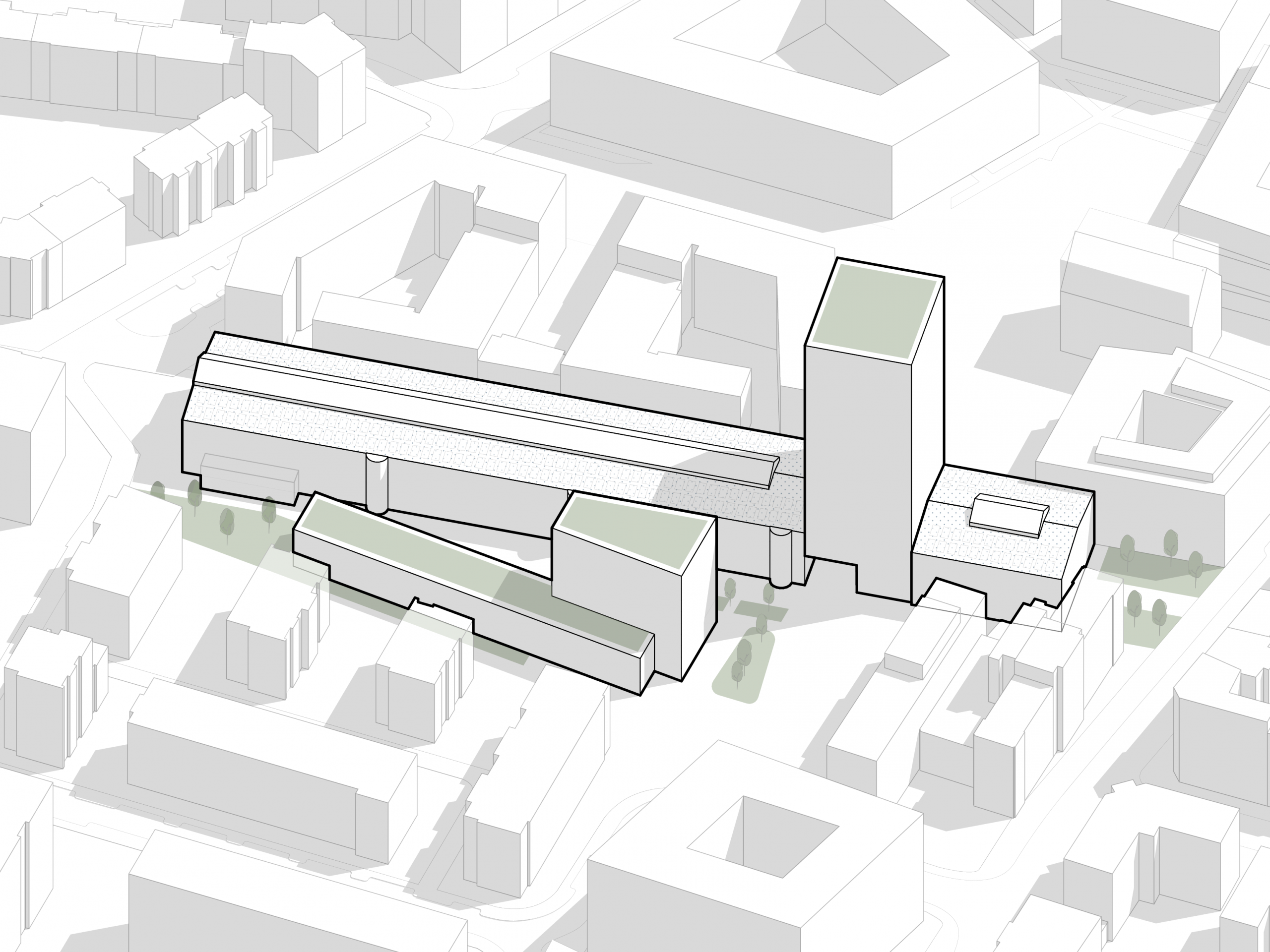
Where a 200-meter-long industrial hall once formed a barrier between the neighborhoods of Unternehmerstadt and Maxfrei, a new piece of city is now emerging. Hall 29 is transforming from a place of production into a space for urban life. The project opens up the site, weaves together history and the present, and creates an urban quarter that connects rather than divides.
The transformation of the existing structure follows the principle of building on what is already there. The hall remains the heart of the ensemble. Its structure is preserved, reinterpreted, and adapted for contemporary use. New buildings complement it with precision, responding to scale and rhythm while defining space. From the industrial typology emerges a new form of urban density, robust, clear, and at the same time open.
Framed, Opened, Connected
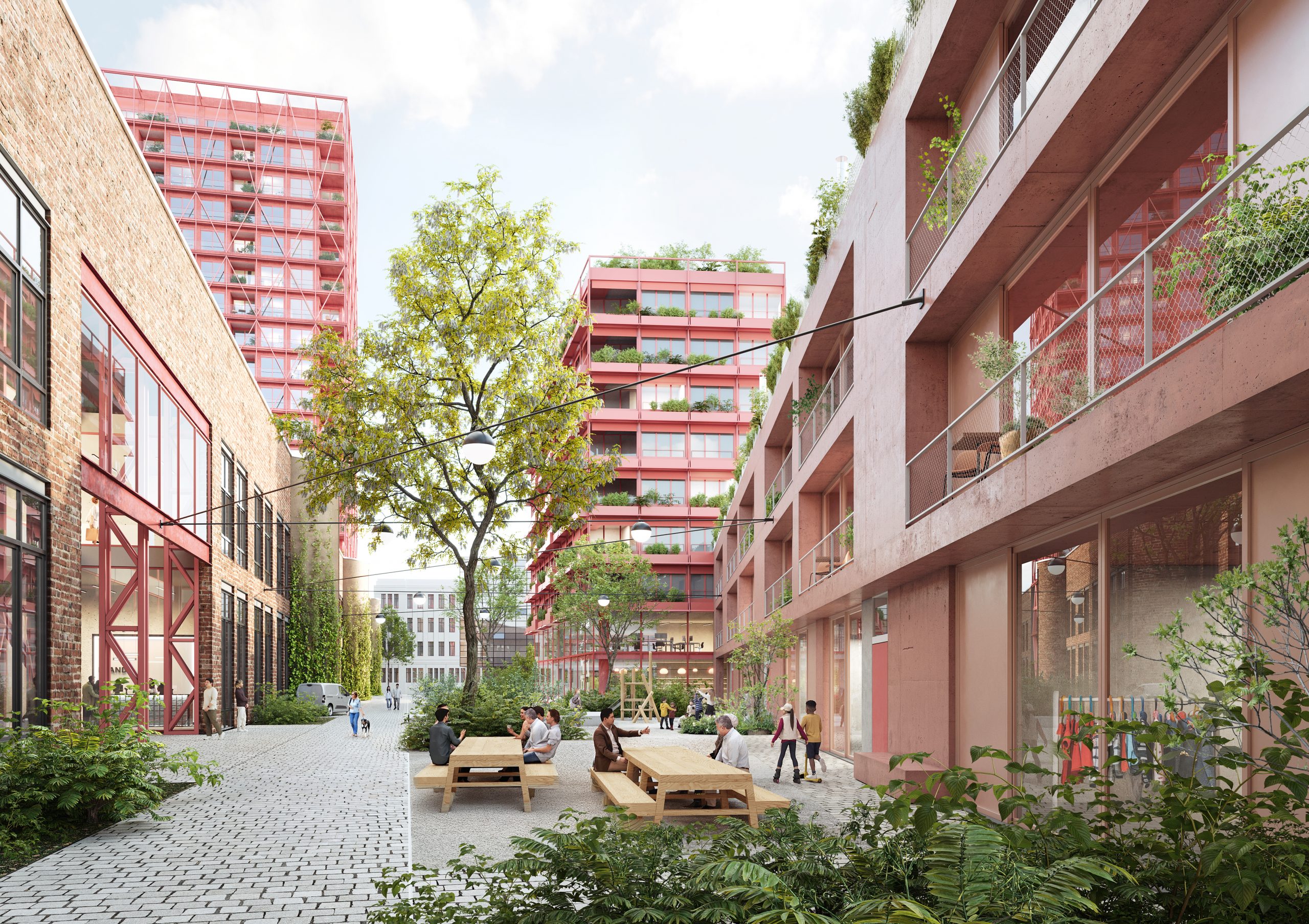
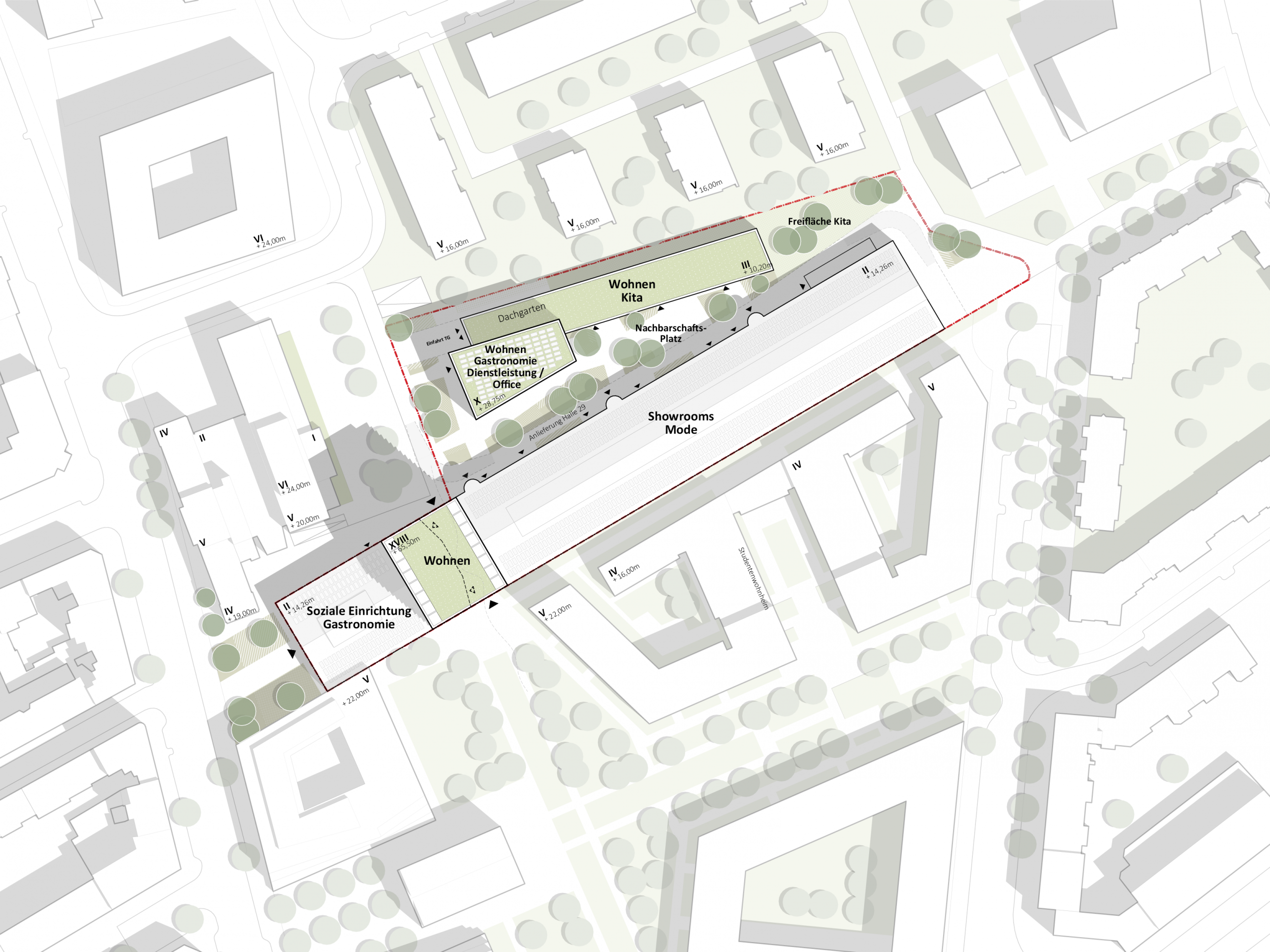
The urban design concept unlocks what was long closed off. Hall 29 becomes permeable, accommodating spaces for culture, gastronomy, and social exchange. New paths and sightlines integrate the site into the surrounding urban fabric. Between existing structures and new buildings, plazas, courtyards, and transitional spaces emerge, enabling both movement and lingering.
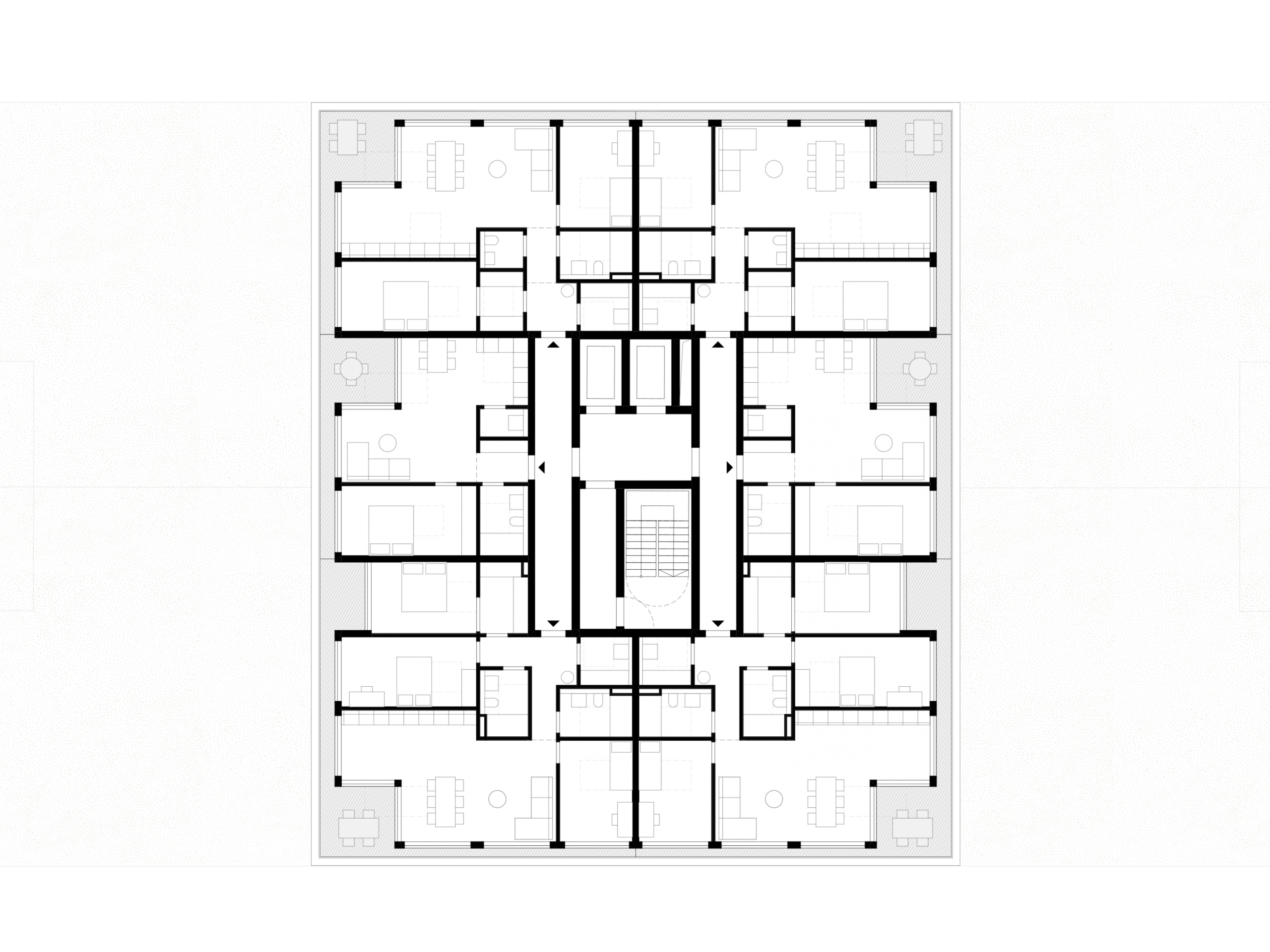
The new buildings create space for diverse ways of living. Around 200 apartments complement the public and commercial uses, together forming a balanced urban composition. A daycare center, restaurants, and flexible commercial spaces activate the quarter and connect the adjacent districts of Unternehmerstadt and Maxfrei, creating a new, cohesive part of Duesseldorf.
Between Living and Working
The Green Space as the Core
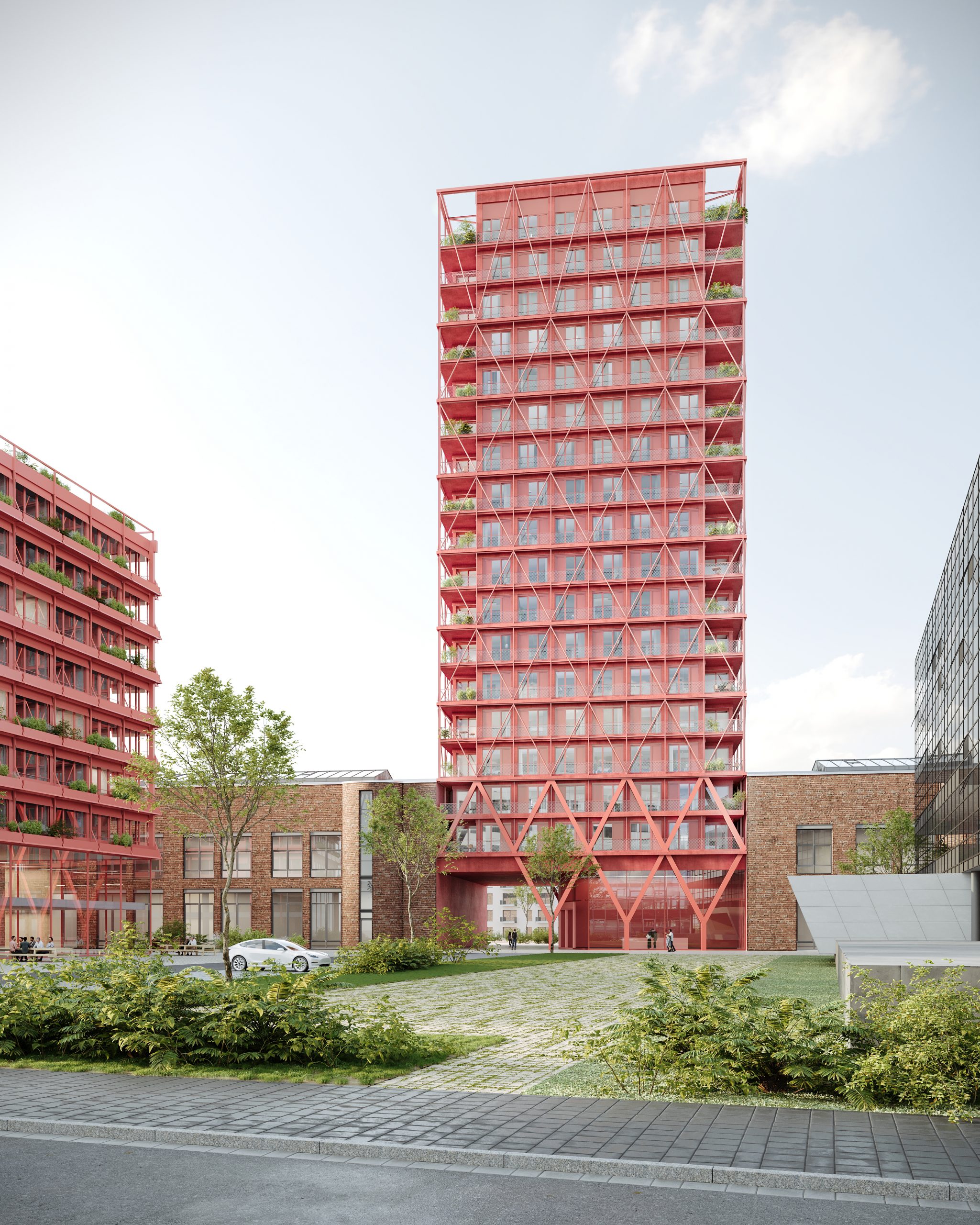
Central open spaces link the buildings and establish a place for encounter. Green roofs, retention areas, and permeable surfaces improve the microclimate and allow the open space to “breathe.” The green core becomes the unifying element — open, calm, and social.
The project understands sustainability as a circular process. The existing structure is further developed rather than replaced. Resource-efficient construction methods, photovoltaic systems, rainwater management, and extensive greenery support the ecological ambition. Equally important is the social dimension: spaces for interaction, flexible uses, and shared amenities strengthen the neighborhood.
Sustainability as an Attitude
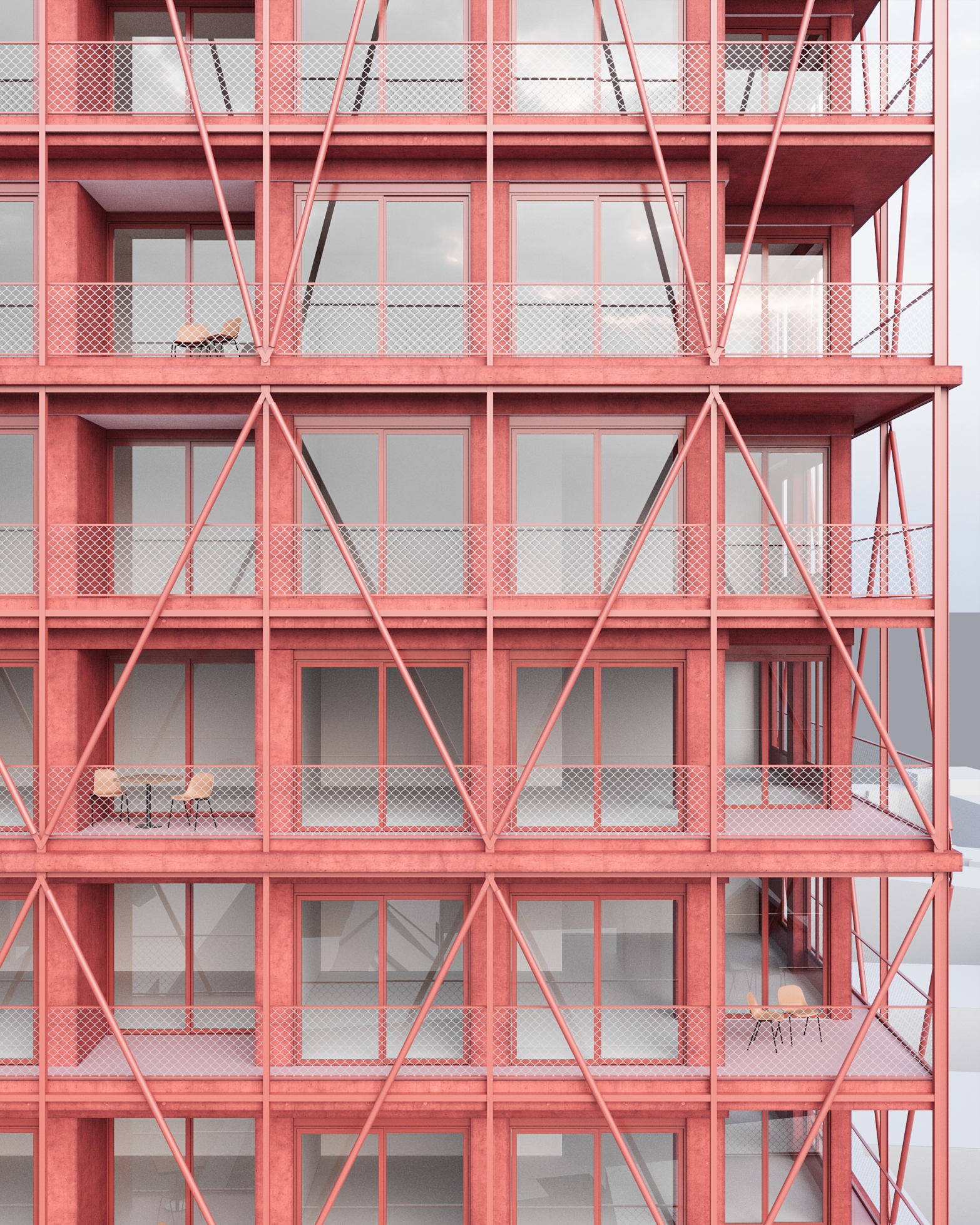
Identity Through Architecture
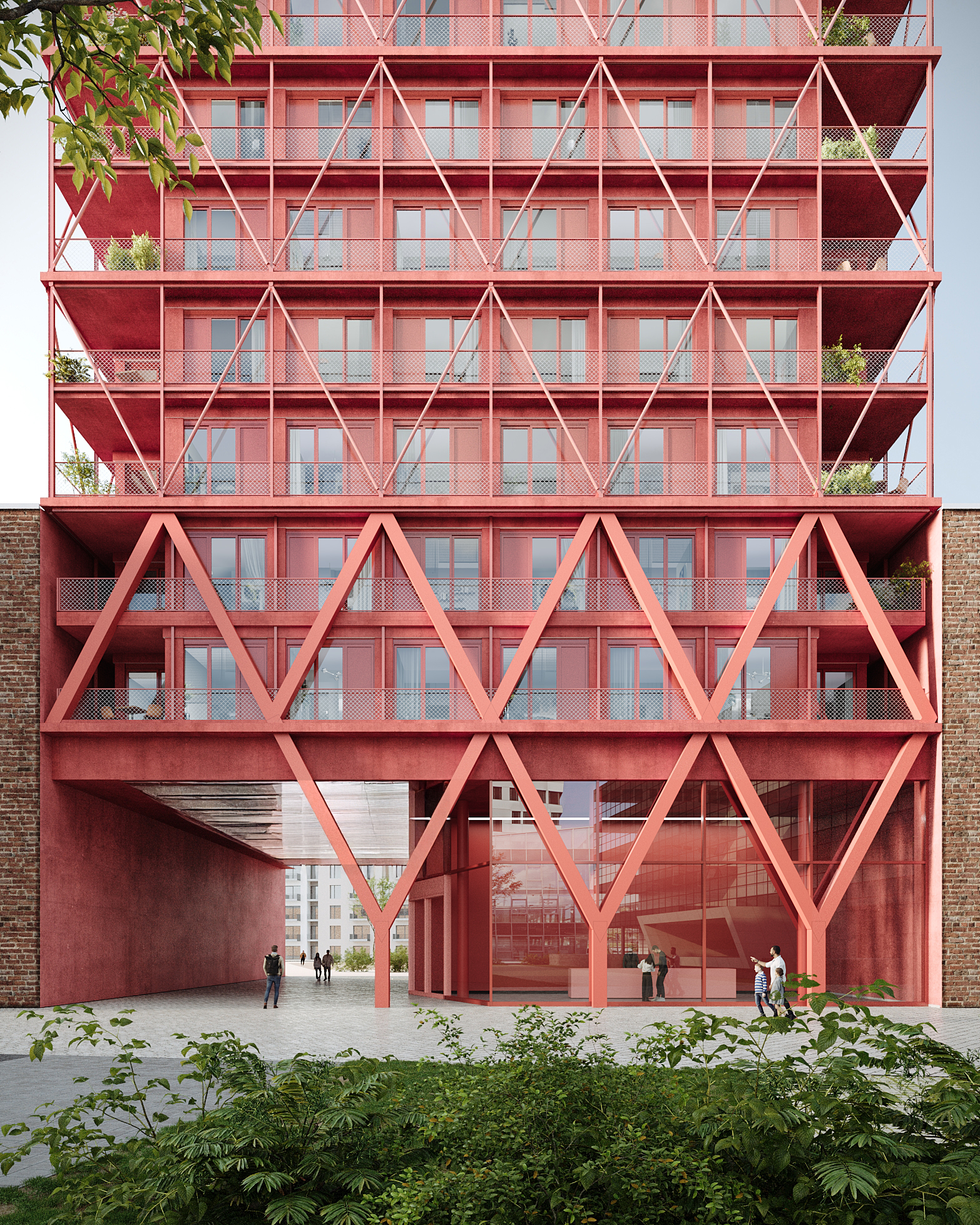
Hall 29 remains a place with character. Its industrial architecture continues to define the site while being translated into a contemporary context. Architecture, urban design, and open space interlock to create clarity, atmosphere, and identity. The result is an urban quarter that grows without forgetting, opens up without losing itself. A piece of Duesseldorf that connects heritage and future.
Location
Duesseldorf
Type
Urban Development
Client
Die Developer Projektentwicklung GmbH
Time Frame
2024
Services
Design (1st Prize, Competition)
Status
Concept
Visualization
&MICA