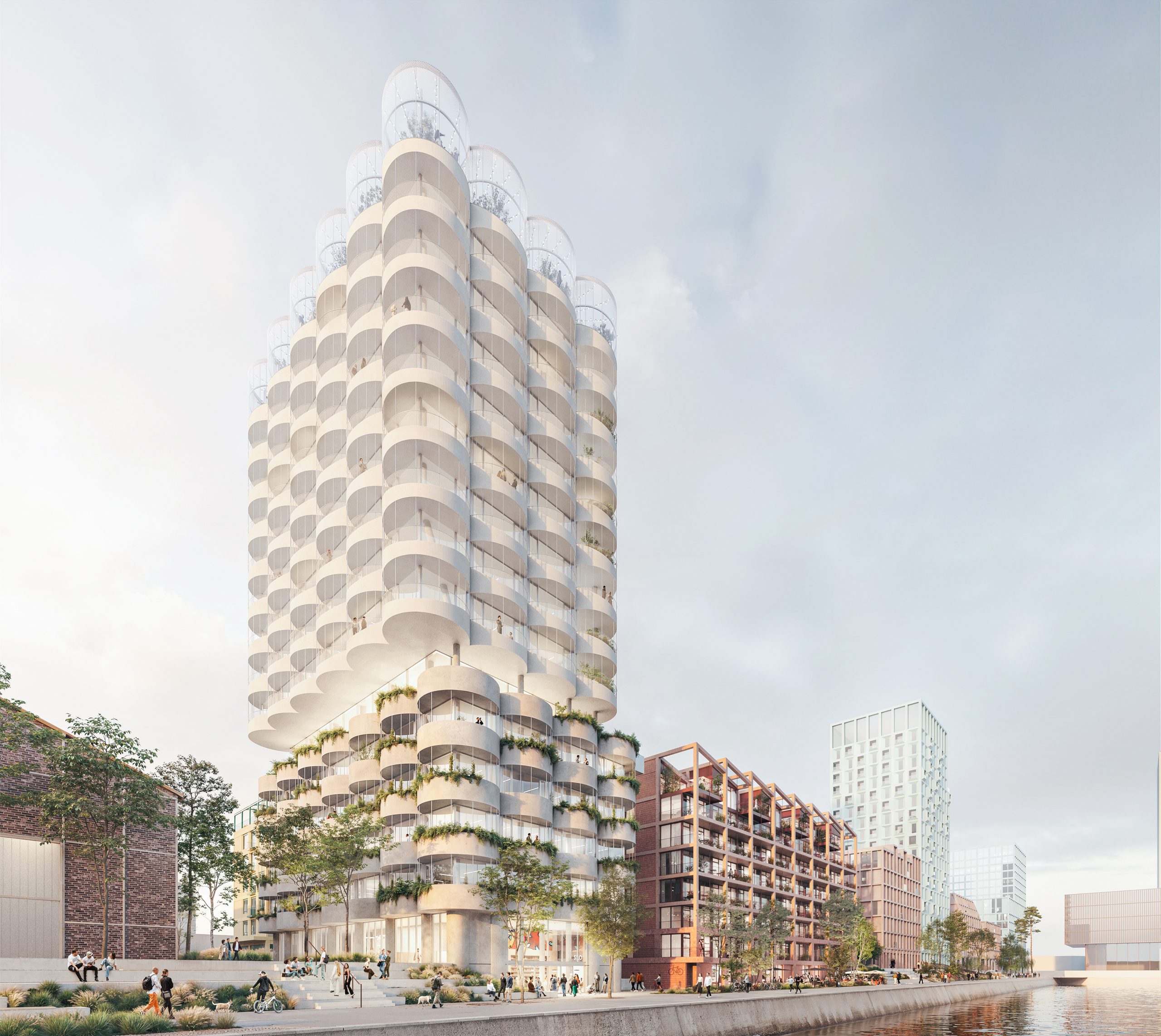
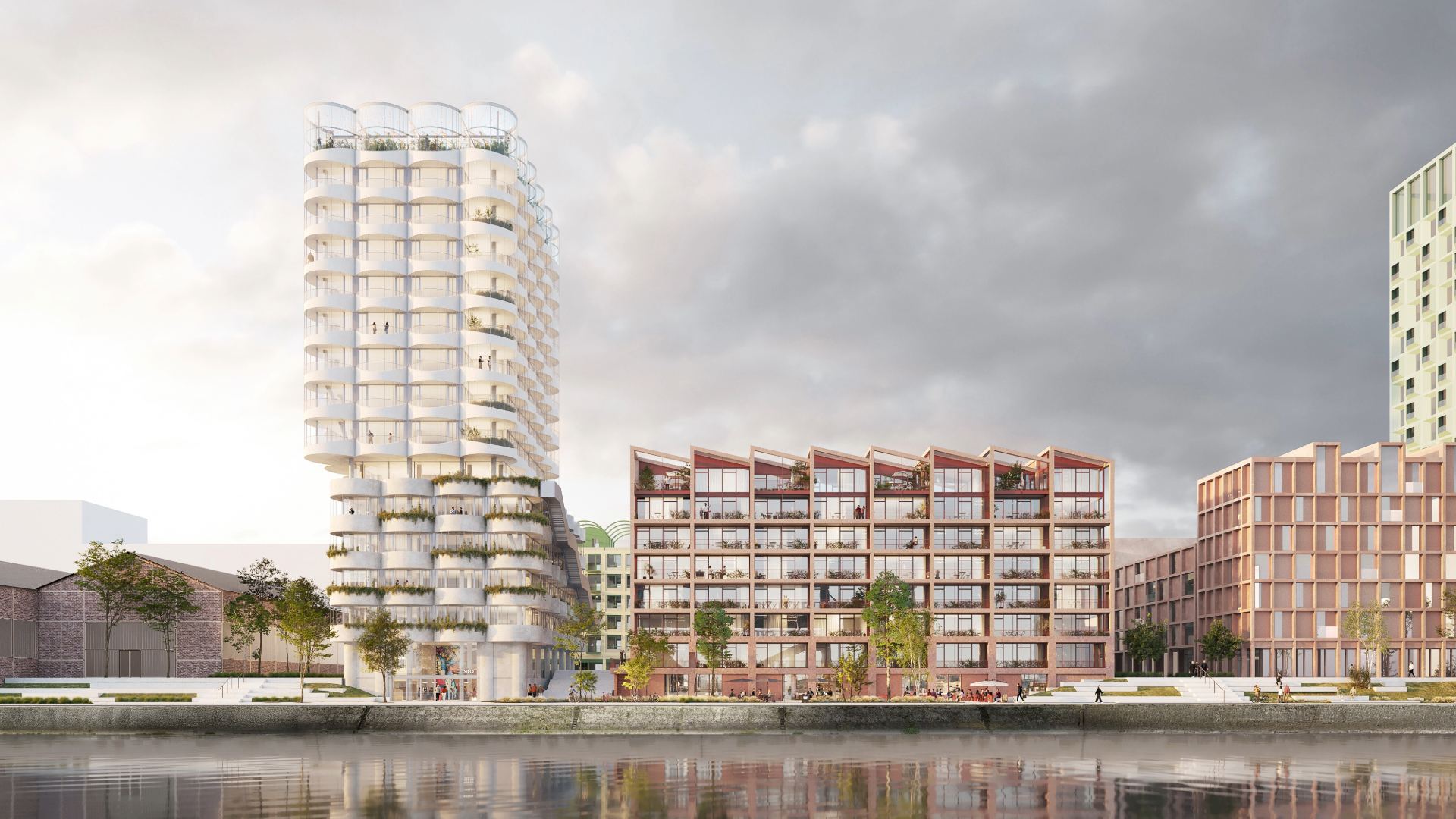
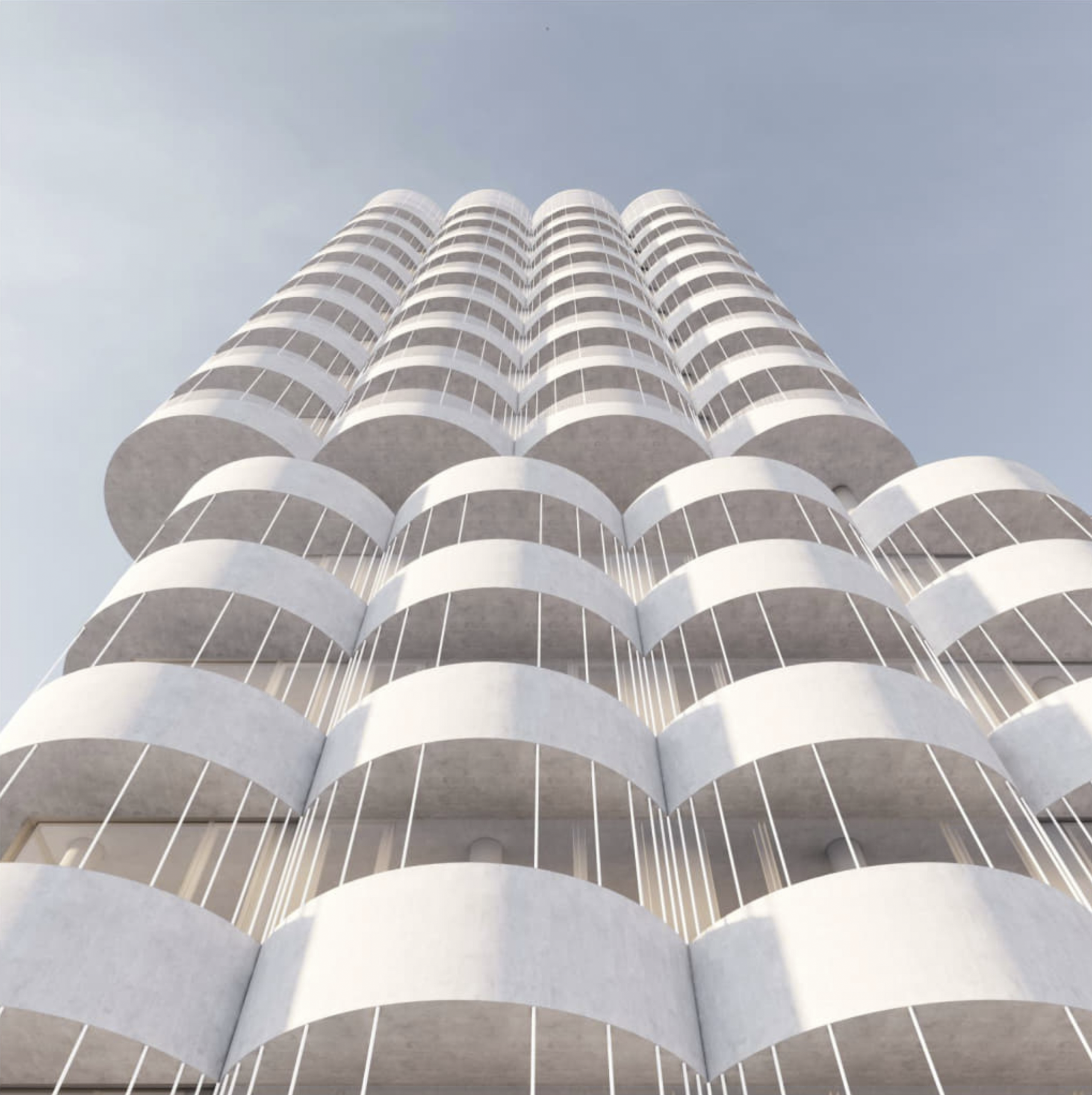
Deutz Harbor is envisioned as a vibrant, mixed-use urban quarter. Our design for Building Plot 05 contributes to this vision through characterful architecture, a rich mix of uses, and identity-forming places. A striking high-rise at the harbor basin references the site’s industrial heritage and shapes the skyline. A new forecourt along Poller Kirchweg provides the ensemble with a welcoming urban address.
Private and shared spaces are distributed across multiple levels. They meet functional requirements while also inviting neighbors and visitors to linger. Individual buildings with varying scales form a “quarter within the quarter” clearly legible, diverse, and with a distinct identity. The result is a neighborhood that brings together social, functional, and constructive sustainability.
Urban Design
Addresses and Openings
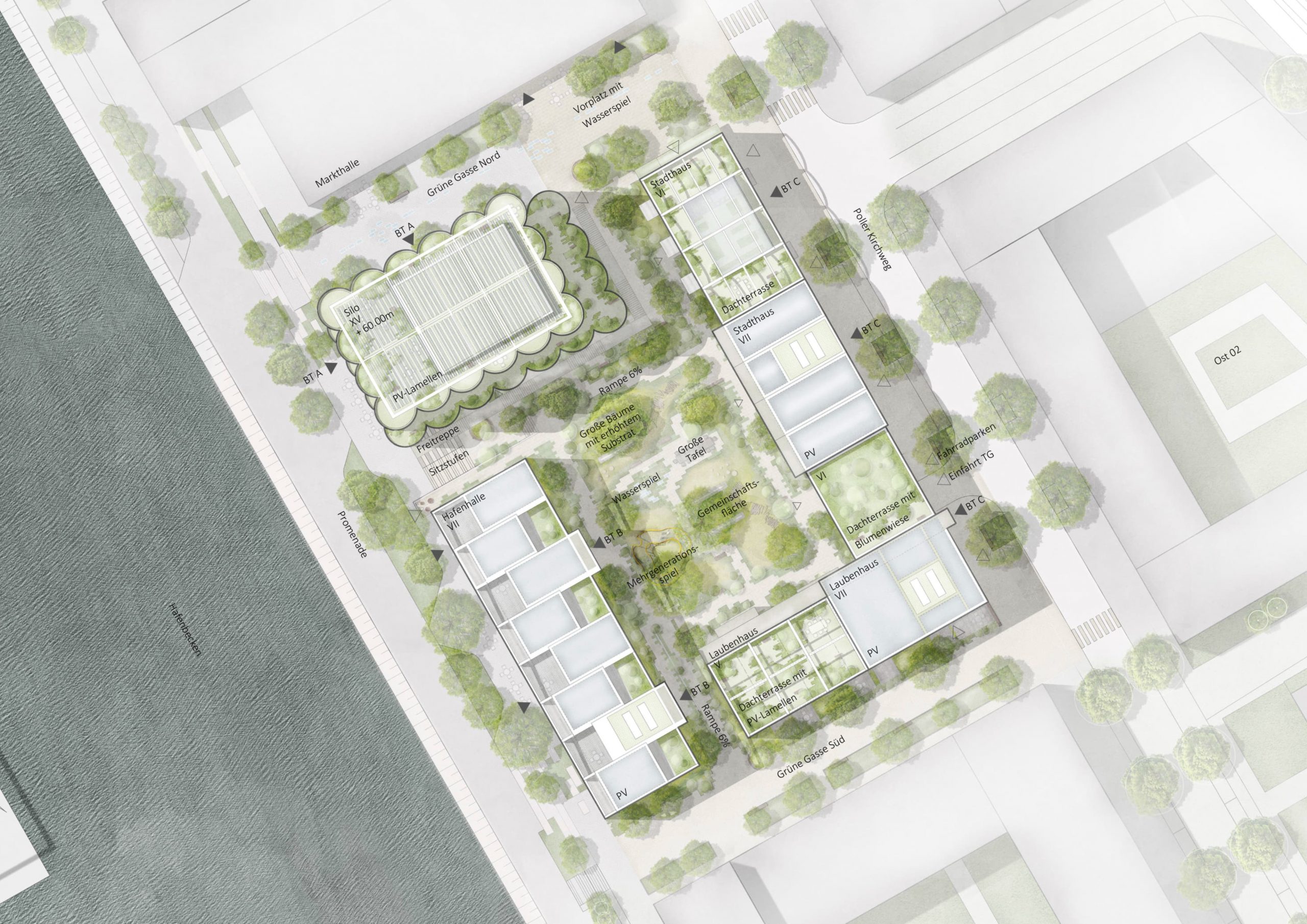
Building Plot 05 is embedded in a dense network of public spaces. Two narrow streets connect Poller Kirchweg with the waterfront promenade. The new forecourt establishes a prominent address between the market hall, the high-rise, and the residential buildings.
Three spatial openings articulate the block: to the west, with stepped seating toward the promenade; to the south, opening onto the Green Lane; and as a threshold between street and courtyard. These openings ensure daylight and natural ventilation, structure the perimeter block, and define transitions between public and private space.
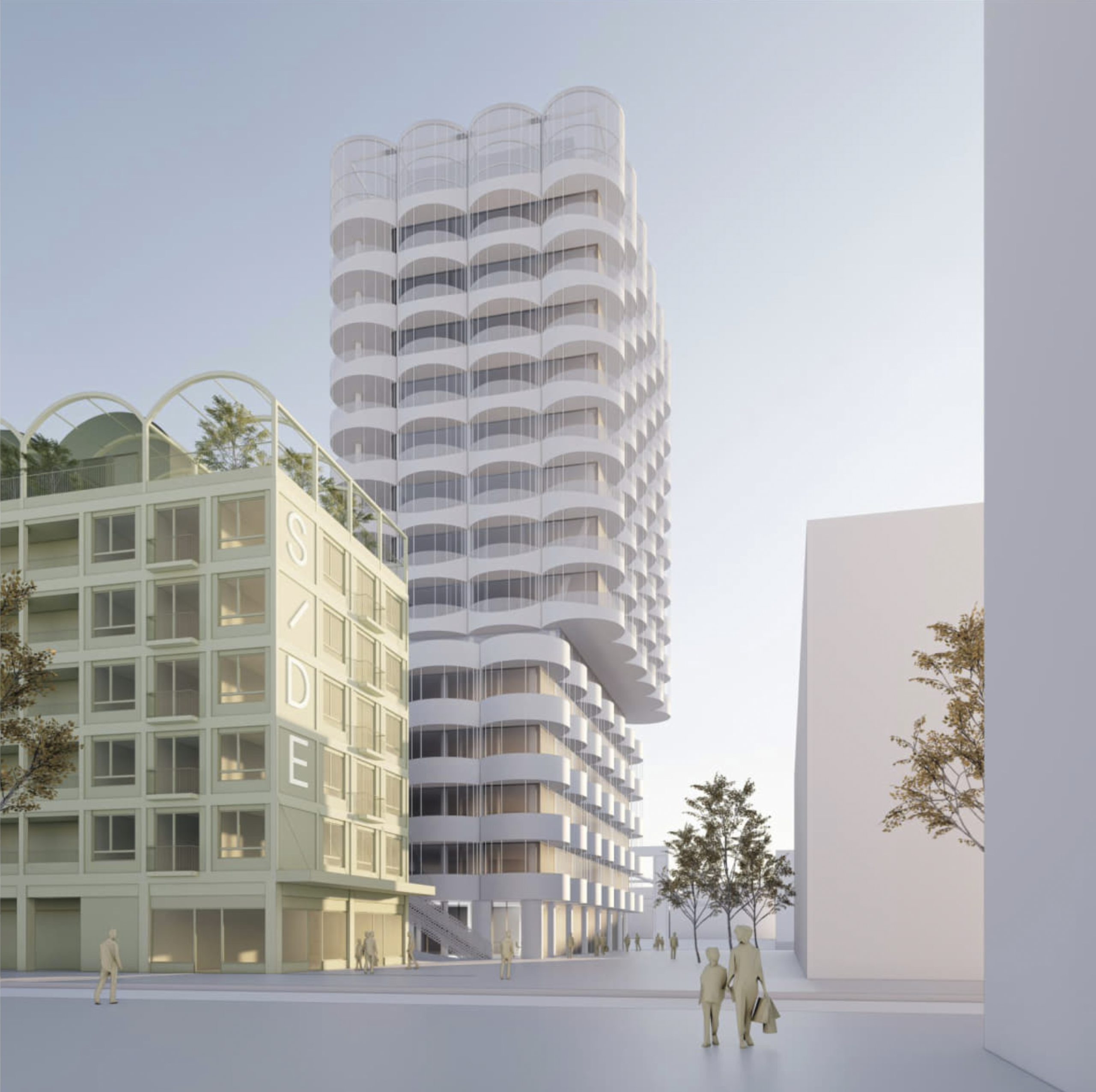
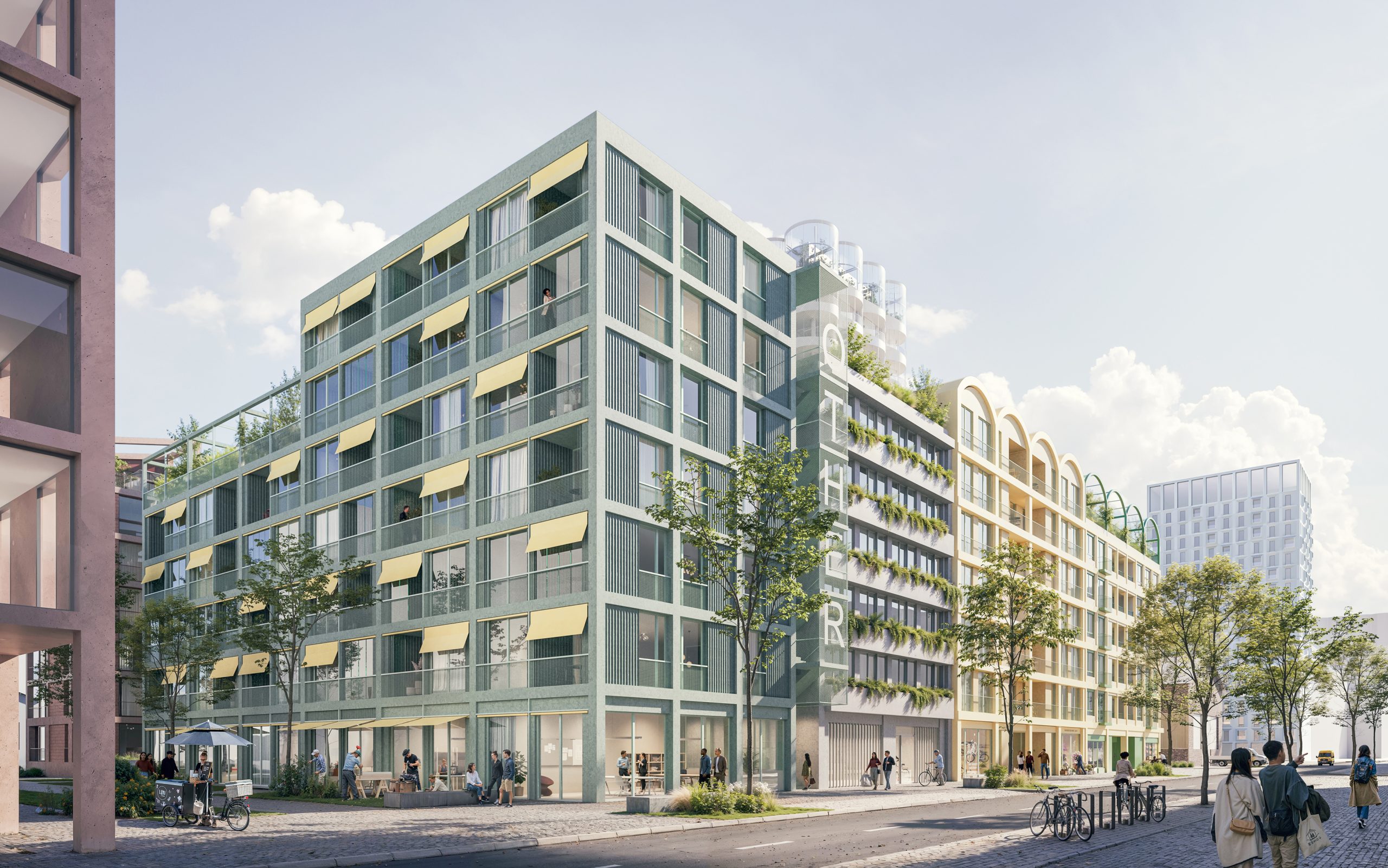
With its iconic form, the tower marks the harbor basin. Its stepped base responds to the heights of neighboring buildings, while a cantilever frames the Green Lane. Townhouses along Poller Kirchweg, the Harbor Hall facing the water, and the arcade building to the south form differentiated typologies with clearly defined addresses.
An intensively landscaped inner courtyard, featuring a water element, playground, and shared terrace at raised ground-floor level, offers high-quality outdoor space for residents. The ground floor of the silo opens barrier-free onto a semi-public courtyard area.
Architecture
Four Typologies, One Ensemble
The differentiation of building volumes allows for specific responses to site and use:
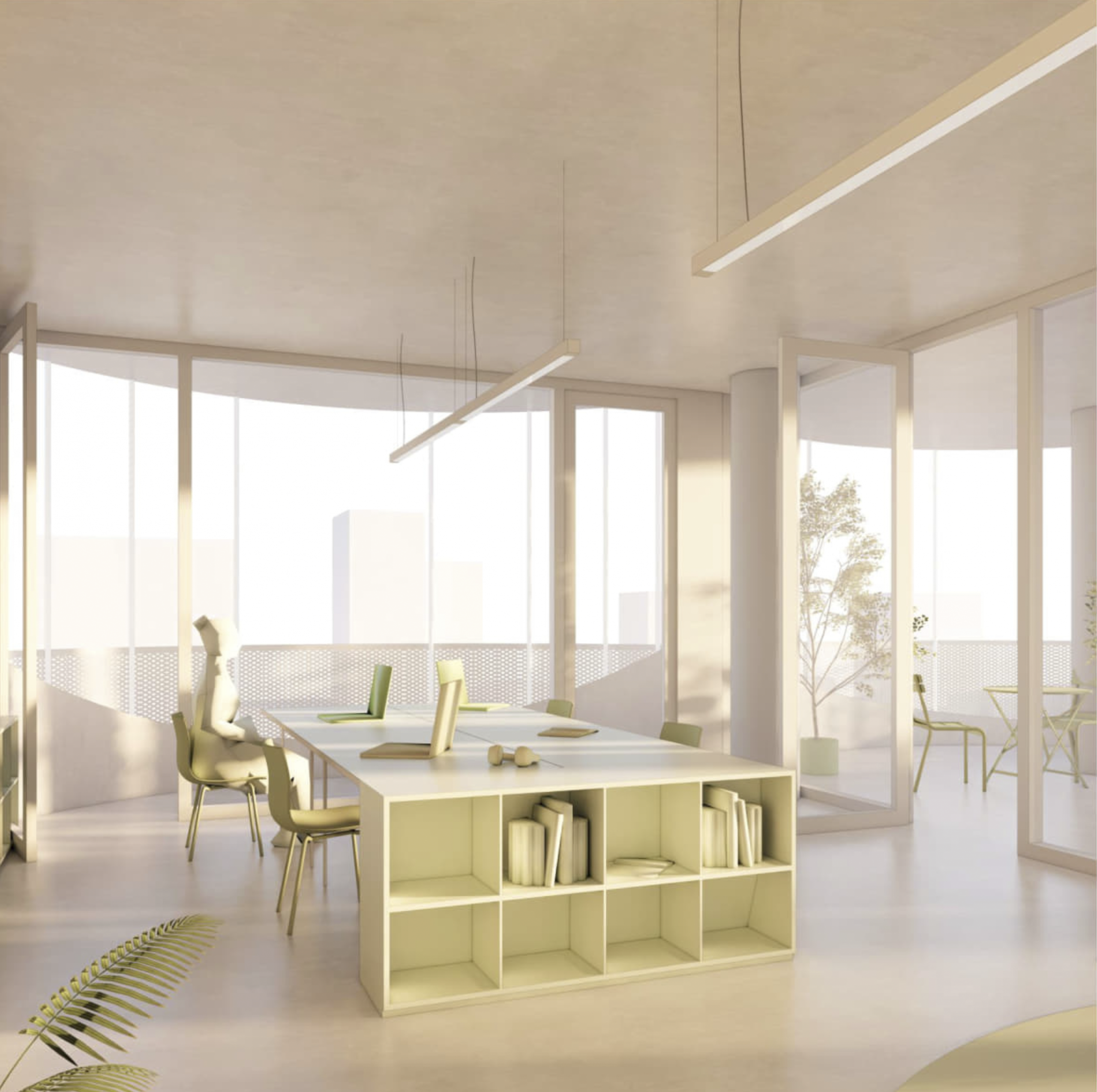
Silo: An industrially inspired structure with co-working spaces in the base and flexible office units on the upper floors. Wraparound balconies and two loggias provide outdoor connections.
Harbor Hall: Residential use with wide loggias facing the promenade. The roof forms a distinctive landscape with maisonette apartments, terraces, and shed roofs.
Townhouses: Two distinct façade designs with characteristic roof forms and balconies create an inviting urban presence.
Arcade Building: Through-apartments with access galleries and shared interaction zones, linking the inner courtyard with the Green Lane.
The tower’s base responds to the scale of the surrounding neighborhood, accommodates new working environments, and connects directly to the courtyard and forecourt via open staircases and balconies.
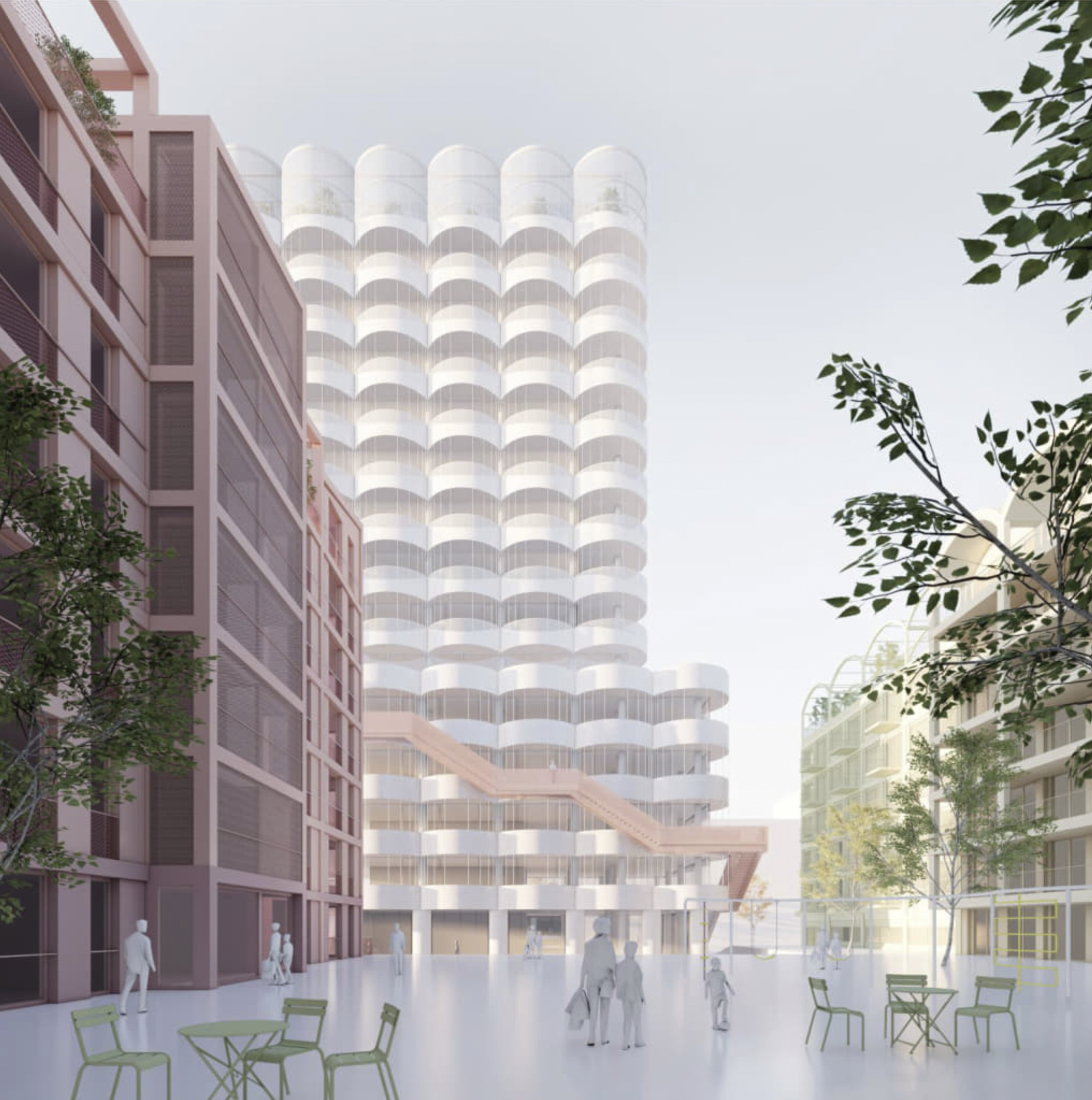
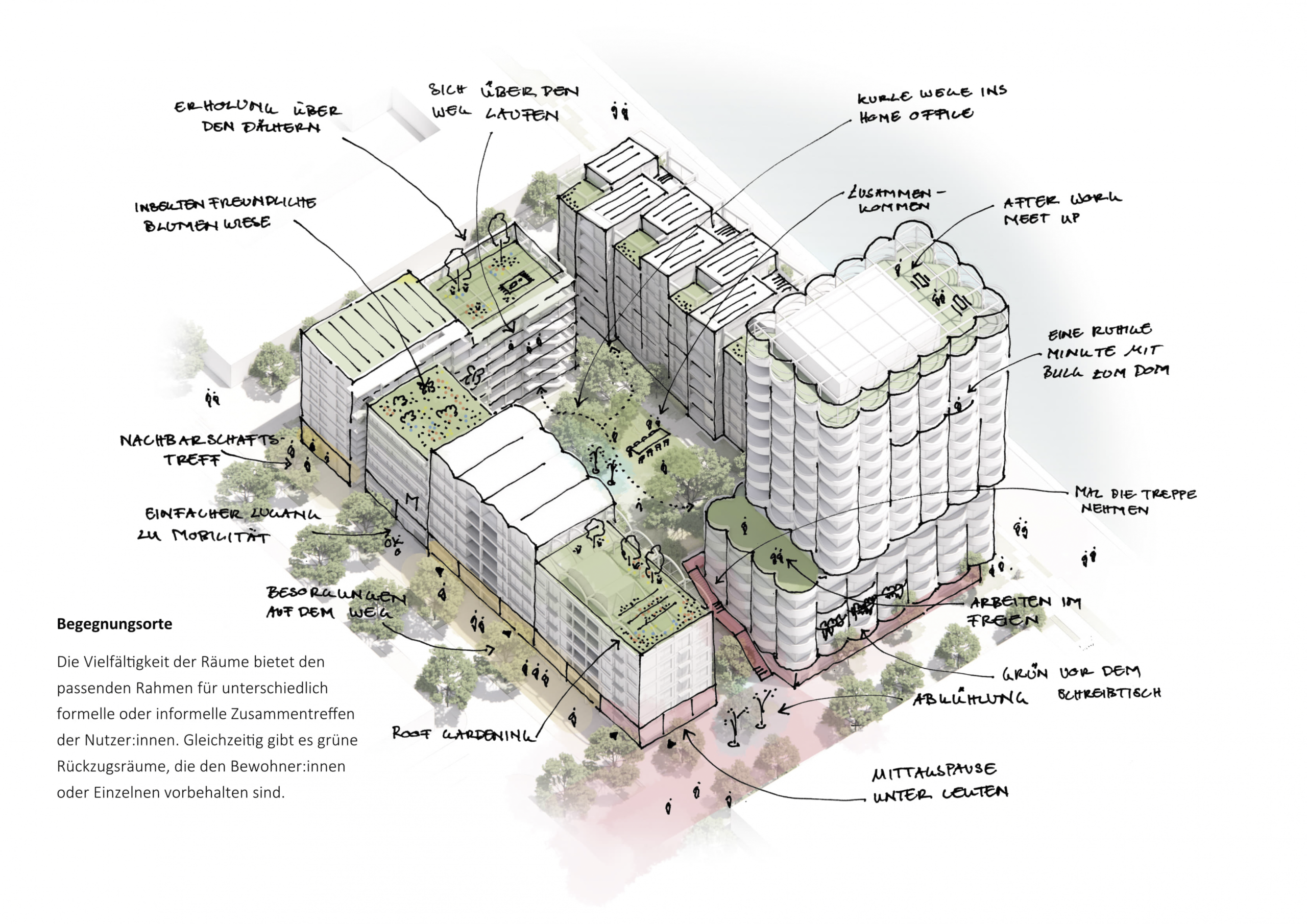
The quarter thrives on both planned and spontaneous encounters. Living and working are not separated but deliberately interwoven. The northern forecourt is animated by a café, market hall, and showroom, while the silo foyer marks the transition to the promenade. On the western edge, restaurant spaces at the base of the Harbor Hall complement the public offering. Along Poller Kirchweg, retail units, a shared space with kitchen and laundry facilities, and studio apartments with work terraces address the street.
At the heart of the ensemble, the courtyard becomes a shared everyday space: a water feature, intergenerational playground, and a large communal table provide room for interaction and a sense of community.
Mixed Use
Encouraging Interaction
Sustainability
Resilient Open Spaces
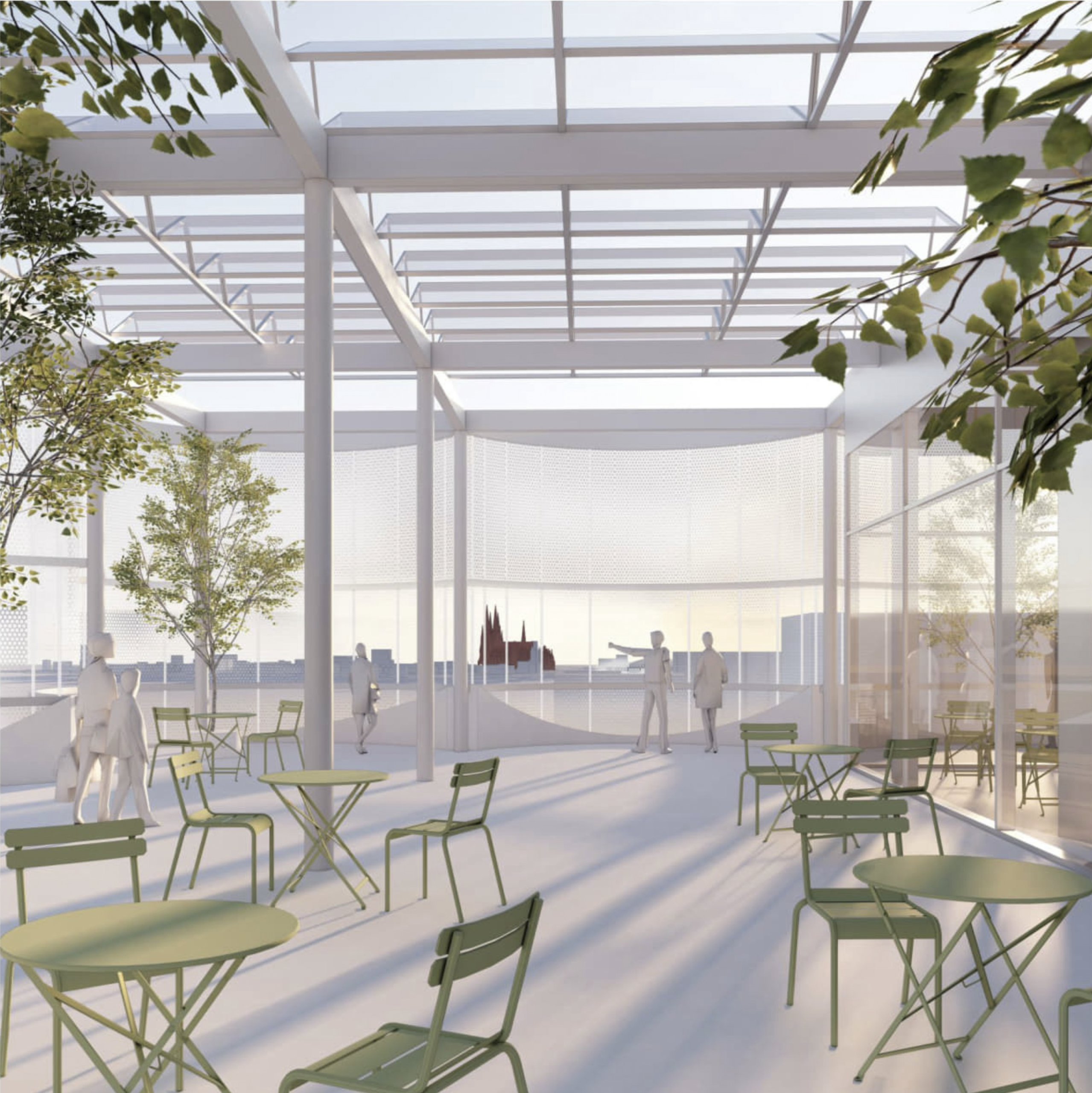
The design approaches sustainability holistically. The buildings are constructed using a hybrid system of CO₂-reduced recycled concrete and solid timber floor slabs. From the outset, separability and recyclability of building components are considered. Photovoltaic systems and a water–brine heat pump ensure resource-efficient energy supply. Green open spaces are created at all levels, serving ecological and climatic functions while also fostering social interaction.
The roofs become vibrant landscapes, accommodating meeting, gardening, play, and work. Orchard meadows, roof gardens, terraces, and rooftop offices create spaces for both people and nature. Rainwater retention, infiltration, and underground storage volumes of 2,000 square meters each provide flood protection while contributing to a healthy microclimate. The result is a resilient, climate-adapted building plot that meets the demands of a dense yet livable urban neighborhood.
Location
Cologne
Type
Urban Development
Client
moderne stadt
Time Frame
2025
Size
Approx. 26.500 m² GFA
Services
Design (1st Prize, Competition)
Status
Concept
Visualization
&MICA